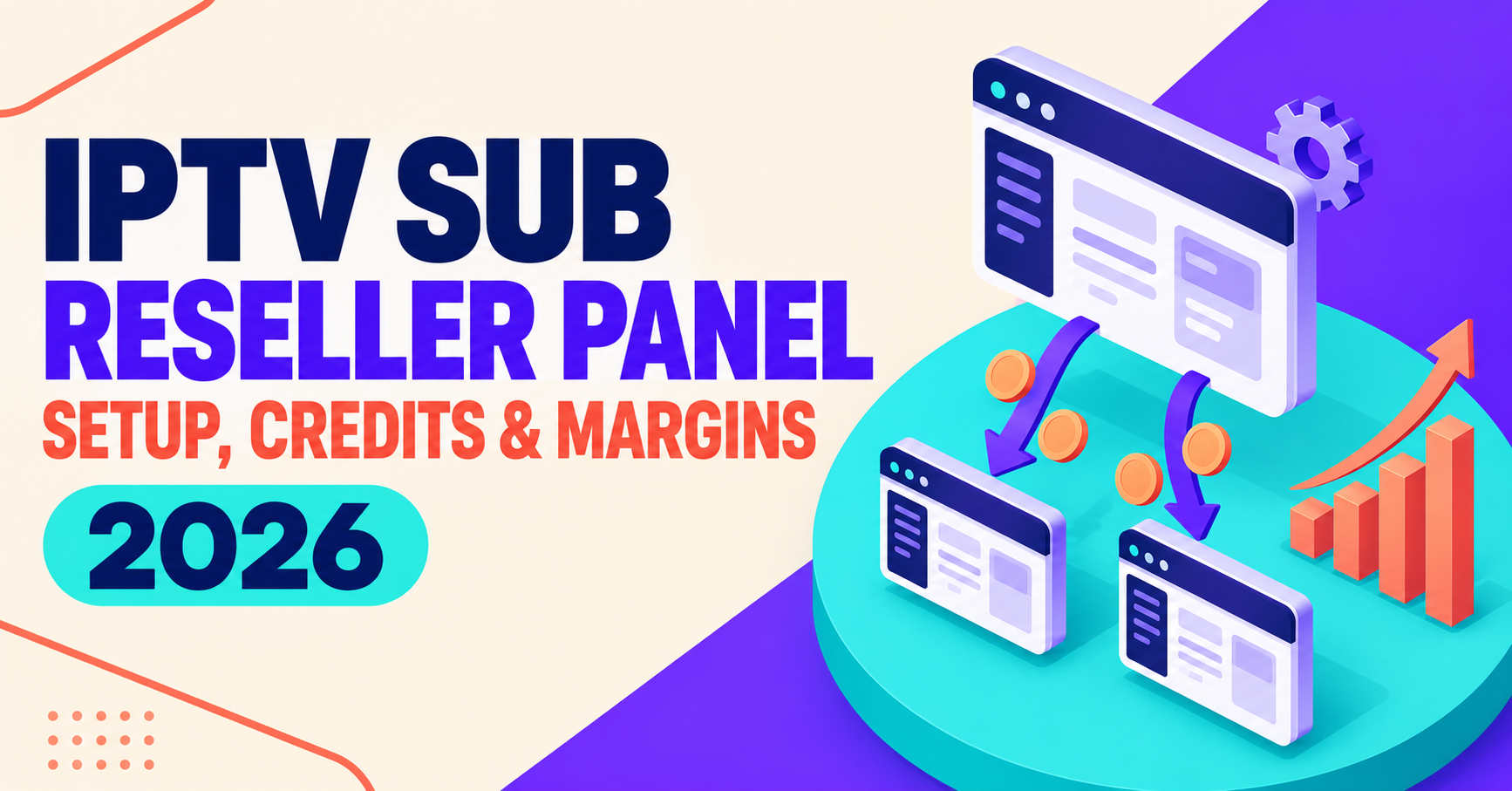

An IPTV Sub Reseller Panel is a smaller dashboard created underneath a main reseller’s account, letting you sell IPTV lines to your own customers without holding a full panel yourself. It works, but it also means someone else controls the infrastructure your entire business sits on, and that trade-off is worth understanding before any money changes hands.
How an IPTV Sub Reseller Panel Actually Works
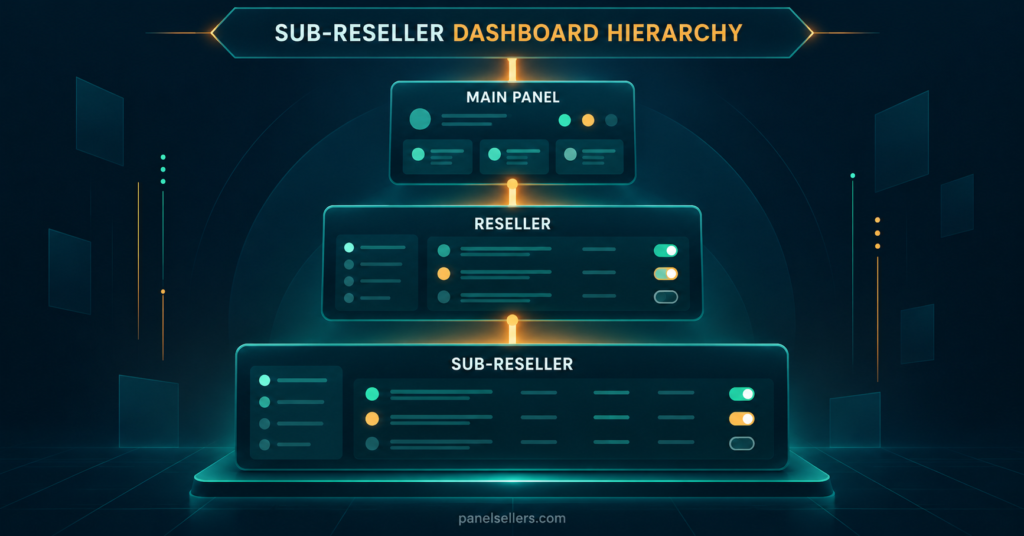
A parent IPTV reseller buys a batch of credits from a panel provider and, instead of using every credit themselves, allocates a portion to a sub-account. That sub-account gets its own login, its own customer list, and usually its own branding options, but it sits entirely inside the parent’s panel. You’re not connecting to the provider directly. You’re connecting through someone else’s infrastructure, and every line you create draws from credits the parent reseller has already purchased and handed down to you.
This matters because it changes who you’re actually accountable to. If the panel provider changes terms, adjusts server capacity, or has an outage, you find out through your parent reseller, not directly. You’re one layer removed from the source, and that layer can either protect you from admin overhead or leave you waiting for answers that aren’t in your control to give.
Most setups work on a simple credit conversion. A parent reseller might buy credits in bulk at a lower per-unit cost, then sell smaller batches to sub-resellers at a markup that still leaves both sides with a margin. The exact ratio varies by provider and by however the parent reseller has structured their own pricing, so there’s no universal number worth quoting here.
Where the Credits and Margins Actually Come From
Every credit you use to activate a customer line comes out of a pool the parent reseller controls. You don’t top up your own credits directly with the underlying provider. You top up through the parent account, which means your pricing flexibility is capped by whatever margin they’ve left you.
This is the part new sub-resellers underestimate. If a parent reseller charges you close to what they paid, you’re squeezed into thin margins before you’ve even priced your own customers. If they’ve built in a healthy markup for themselves and still leave room, you can run a genuinely profitable operation. There’s no way to know this from outside the relationship. It has to be asked directly and confirmed with real numbers before committing.

Pro tip: Ask the parent reseller for their actual sub-reseller pricing tiers in writing before transferring any money, not just a verbal promise of “good margins.”
What You Depend On Your Parent Reseller For
A sub-reseller panel removes the need to negotiate directly with an IPTV panel provider, but it replaces that relationship with dependency on one person or one small team. Consider what sits entirely in their hands:
Account continuity. If the parent reseller stops paying their own provider, gets suspended, or simply decides to shut down their operation, every sub-account underneath them goes with it. You have no direct relationship with the provider to fall back on.
Support response times. When something breaks, your customers come to you, and you go to your parent reseller, who then goes to the provider if the issue is server-side. That’s two hops instead of one, and each hop adds delay.
Customer ownership clarity. Some sub-reseller arrangements are genuinely yours to keep even if the relationship ends. Others tie your customer list to the parent’s panel in a way that makes it hard to migrate if you ever want to move providers.
| Sub-Reseller Consideration | What It Actually Means for You |
|---|---|
| Credit pricing | Sets your maximum possible margin before you even price customers |
| Parent account stability | If it goes down, your entire operation goes down with it |
| Customer data portability | Determines whether you can leave without losing your customer base |
Warning Signs Before You Buy Into a Sub-Reseller Setup
A few patterns tend to show up before things go wrong, and they’re worth spotting early rather than after a batch of credits has already been paid for.
Vague answers about server ownership are one. If a parent IPTV Panel reseller can’t explain, even in general terms, whose infrastructure the panel actually runs on, that’s a gap worth pressing on. You don’t need technical specifics, just confidence that the chain of responsibility is understood.
Reluctance to put pricing in writing is another. Verbal promises about margins that never appear in an invoice, contract, or dashboard screenshot tend to shift later, usually not in the sub-reseller’s favour.
No clear escalation path is a third. Ask what happens when a customer’s line stops working at 2am. If the answer is a shrug, that’s the experience your own customers will eventually get too, filtered through you.
Questions Worth Asking Before You Commit
Before transferring funds into any sub-reseller arrangement, a short list of direct questions saves a lot of trouble later:
What happens to my existing customer lines if this relationship ends. Who do I contact directly if the parent reseller is unreachable for an extended period. Are credit prices fixed or can they change without notice. Is there a minimum volume commitment, and what happens if I don’t hit it.
None of these questions are aggressive to ask. A parent reseller running a legitimate, well-organised operation should be able to answer all of them without hesitation.
Pro tip: Keep a written record of every credit price change a parent reseller makes. Patterns of frequent, unexplained increases are usually the first sign of an unstable arrangement.
Sub-Reseller Evaluation Checklist
- Confirm the credit-to-line conversion rate in writing
- Ask whether customer data stays with you if you leave
- Clarify who handles technical support escalations
- Check how quickly the parent reseller typically responds to issues
- Get pricing terms confirmed as fixed or variable
- Ask about any minimum monthly volume requirements
- Understand what happens to active customers if the parent account is suspended
Pro tip: Start with a smaller credit batch to test reliability and communication before committing to a larger volume purchase.
Frequently Asked Questions
Can a sub-reseller become a full reseller later?
Yes, in most setups a sub-reseller can eventually purchase a direct panel and credits from the provider instead of routing through a parent account, though the process depends on the individual provider’s terms.
Do sub-resellers get their own dashboard branding?
Many panels allow some level of branding for sub-accounts, but the extent varies by provider and by what the parent reseller has enabled for you.
Is a sub-reseller panel cheaper to start than a full reseller panel?
Generally yes, because you’re buying a smaller allocation of credits rather than a full bulk package, which lowers the upfront cost of getting started.
What happens if the parent reseller raises prices unexpectedly?
This depends entirely on the terms agreed at the start. Arrangements without fixed pricing commitments leave sub-resellers exposed to sudden increases, which is why confirming this in writing matters.
Can I run a sub-reseller panel and a full reseller panel at the same time?
Some people do, often using the sub-reseller setup for a specific market segment while building direct provider relationships elsewhere, though this adds administrative complexity.
An IPTV Sub Reseller Panel can be a genuinely practical way to start a reselling business without the upfront cost of a full panel, but it only works well when the parent relationship is transparent about pricing, support, and what happens if things end. Before committing any funds, get the credit pricing, customer ownership terms, and support process confirmed in writing, and start with a modest credit batch to see how the relationship actually performs before scaling up. For anyone deciding between routes into IPTV reselling, comparing IPTV Panel reseller pricing packages directly against a sub-reseller arrangement is worth doing before making a final decision.