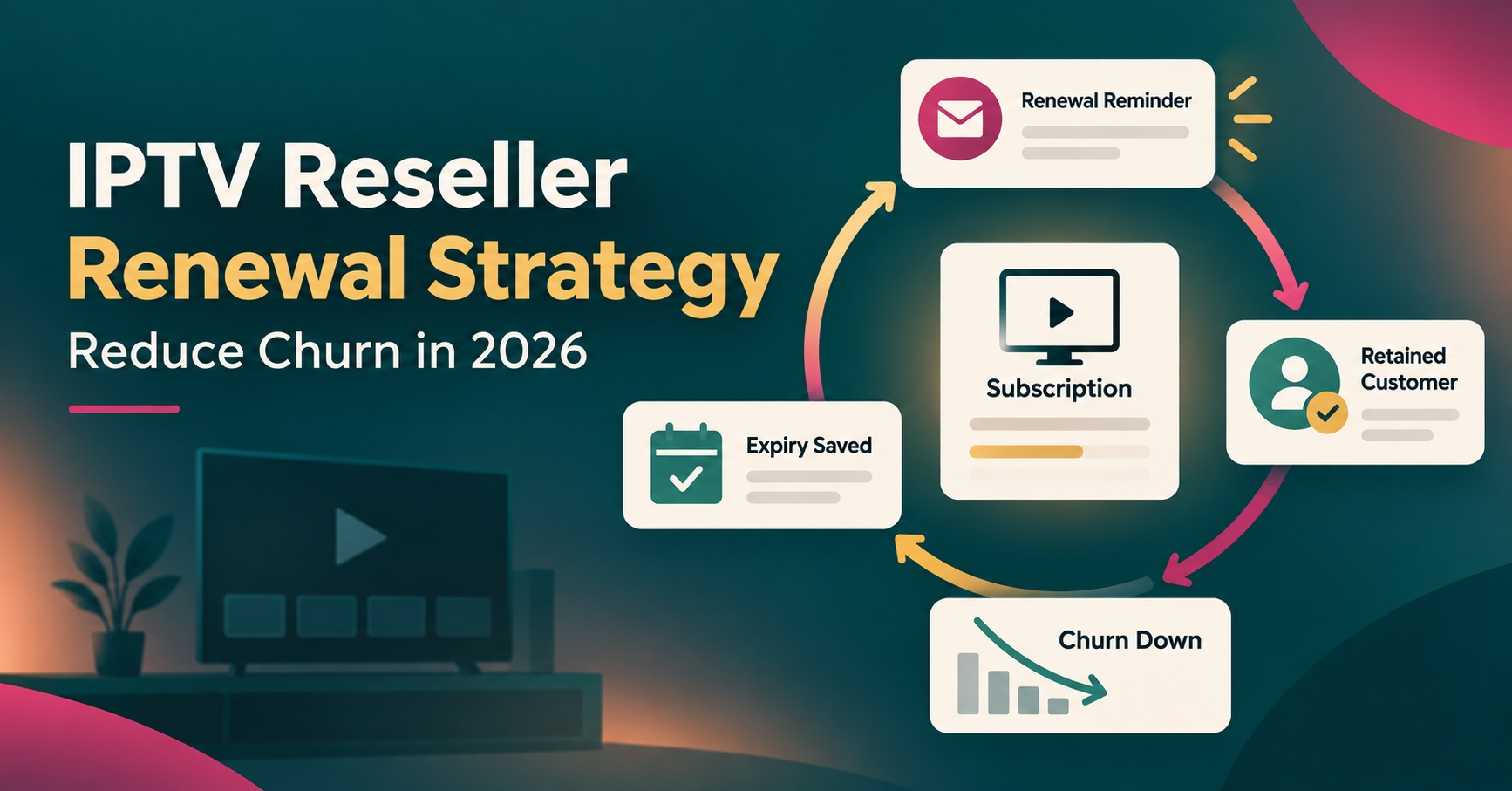

A working IPTV Reseller Renewal Strategy treats renewal as a process that begins weeks before a line expires, not a single invoice sent the day the service stops. Most UK IPTV Panel resellers lose customers not because the product failed but because nobody reached out until it was too late to matter. Getting renewal timing, reminder cadence, and a proper win-back sequence right is what separates a reseller business with predictable monthly revenue from one that spends every week chasing new sign-ups to replace the ones that quietly walked away.
Why Most Renewal Problems Start With Timing, Not Price
Resellers often assume a lapsed customer left because a competitor undercut them on price. In practice, the far more common cause is simpler: the customer forgot the line was expiring, missed the single reminder that was sent, and by the time they noticed the service had stopped, they had already found something else to watch. Price matters, but timing is usually the first thing to fix.
A subscription that expires without warning puts the customer in a position where reactivating feels like starting over. If they’ve moved on to a free trial elsewhere or simply stopped thinking about the service, winning them back becomes far harder than it would have been with a well-timed nudge three or four days earlier.
Building an IPTV Reseller Renewal Strategy Around a Reminder Cadence
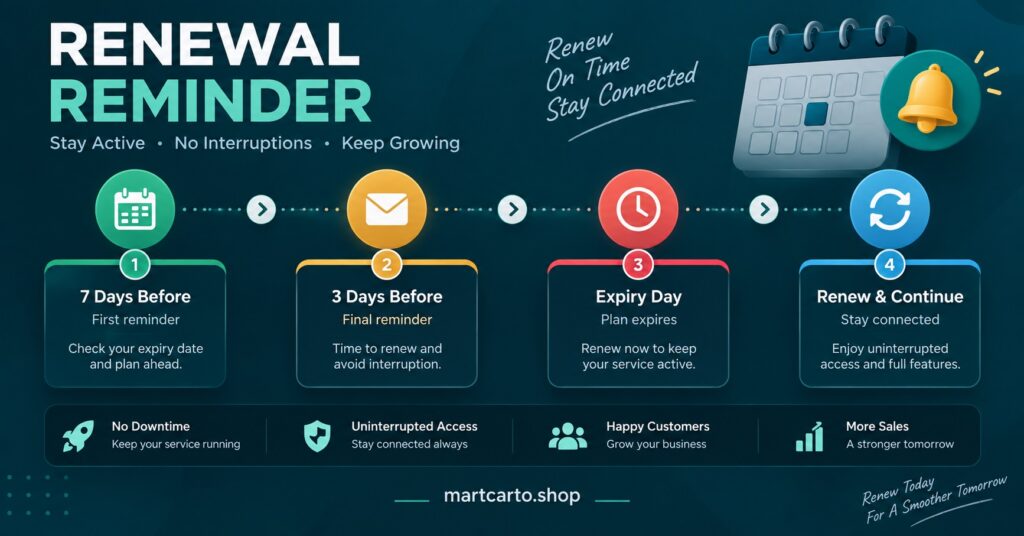
A single reminder is not a strategy. Customers are busy, notifications get buried, and a message sent once rarely lands at the moment someone is ready to act. A cadence spread across several touchpoints, each with a slightly different tone, gives a renewal far more chances to succeed without becoming intrusive.
The table below shows one workable cadence. It isn’t the only correct sequence, but it illustrates the principle of starting early and tapering off rather than sending everything in the final 48 hours.
| Days before expiry | Reminder channel | Message focus |
|---|---|---|
| 7 days | Email or app notification | Simple heads-up, no urgency language |
| 3 days | WhatsApp or SMS | Direct reminder with a renewal link |
| 1 day | WhatsApp or SMS | Short, practical, mentions exact expiry time |
| Day of expiry | Direct message or call | Offer help renewing, not just a warning |
Pro tip: Keep the 7-day message plain and informational. Customers tune out anything that sounds like a sales push a week before they actually need to act.
Checking how reseller credit expiry rules affect renewal timing is worth doing before setting a cadence, since credit expiry policies can shift how much lead time a reseller actually has to work with.
What to Do the Moment a Customer Doesn’t Renew
Not every lapsed customer needs the same response. Someone who missed a reminder by a day or two is in a very different position from someone who let a line sit expired for a month. Treating both the same way, usually with one generic “come back” message, wastes the opportunity with the first group and undersells the effort needed for the second.
For recently lapsed accounts, a short direct message acknowledging the missed renewal and offering to sort it out immediately tends to work better than an automated email. For accounts that have been inactive longer, the approach needs to shift toward understanding why they left before asking them to return.
Designing a Win-Back Sequence That Doesn’t Feel Like Begging
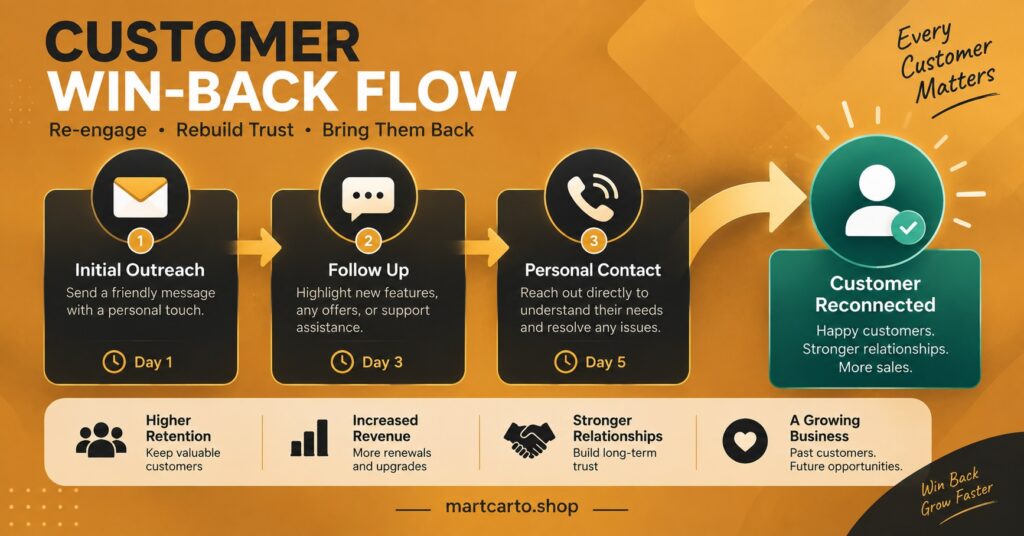
A win-back sequence works best when it’s staged rather than delivered as one message. The first contact should be low pressure, simply checking whether the customer still wants the service. If there’s no response, a second message a week or two later can include a specific reason to come back, such as improved reliability or a small loyalty gesture. A third and final attempt, sent a month or so after the second, should be treated as the last outreach before the customer is moved to an inactive list rather than followed up indefinitely.
Chasing a customer for months after they’ve clearly disengaged rarely converts and can damage the relationship if it starts to feel like harassment. Knowing when to stop is as much a part of the strategy as knowing when to start.
Pro tip: Ask lapsed customers one direct question when you reach out, such as whether the issue was reliability, price, or simply not using the service enough. The answer tells you which part of the funnel actually needs fixing.
Budgeting for a renewal push is easier when a reseller has looked at current reseller credit pricing when planning renewals, particularly if a win-back offer involves a discounted renewal period.
Retention Metrics That Actually Tell You Something
Overall churn rate is the number most IPTV Panel resellers watch, but it hides more than it reveals. A reseller with a 15 percent monthly churn rate could have a healthy business with a slow trickle of natural attrition, or a business bleeding customers from one specific failure point, such as a particular device type or a support gap on weekends. Breaking churn down by cause, by customer tenure, and by which reminder stage a customer dropped off at gives a much clearer picture of where to intervene.
Renewal rate by reminder stage is particularly useful. If most renewals happen only after the final day-of-expiry message, that’s a signal the earlier reminders aren’t landing and the cadence needs adjusting, not necessarily that the product itself has a problem.
Sub-Reseller Considerations for Renewal Management
Sub-resellers running renewals through a parent panel face a slightly different set of decisions. Reviewing sub-reseller margin considerations matters here, because a renewal discount that eats into an already thin margin can undo the benefit of retaining the customer in the first place. Sub-resellers also need clarity on whether they’re expected to run their own reminder cadence independently or whether the parent panel handles any part of that process, since duplicated or conflicting reminders confuse customers and make the business look disorganised.
Before committing to a renewal push that involves restocking credits in bulk, it’s worth checking minimum order requirements when restocking credits, particularly around seasonal renewal spikes when demand for fresh credits tends to increase.
When a Renewal Strategy Isn’t Enough
Even a well-run reminder cadence and win-back sequence cannot fix an underlying reliability problem. If customers are lapsing because streams buffer constantly or support takes days to respond, no amount of renewal messaging will hold onto them for long. Renewal strategy works on customers who are otherwise satisfied but disorganised or forgetful. It does very little for customers who are quietly unhappy and simply waiting for a convenient moment to leave.
Frequently Asked Questions
How many days before expiry should the first renewal reminder go out?
Around seven days gives most customers enough notice without the message feeling urgent or pushy. Earlier than that tends to get forgotten before it’s useful.
What causes reseller renewal rates to drop suddenly?
A sudden drop is usually tied to a specific change, such as a reminder system failing silently, a support delay during a busy period, or a reliability issue affecting a particular device or region.
Is a win-back campaign worth running for accounts that lapsed over 60 days ago?
It can be, but expectations should be modest. A short, low-pressure message costs little to send, though conversion rates fall sharply the longer an account has been inactive.
Should sub-resellers handle renewals independently or through the parent panel?
This depends on the agreement in place, but customers should never receive conflicting reminders from both sides. Whichever party owns the customer relationship should own the renewal communication.
What renewal metrics matter more than overall churn rate?
Renewal rate broken down by reminder stage and by lapse duration tends to be more actionable than a single churn percentage, since it points directly to where the process is failing.
Conclusion
An effective IPTV Reseller Panel Renewal Strategy doesn’t rely on one clever tactic. It comes from starting reminders early, spacing them sensibly across different channels, responding differently to customers who lapse for a few days versus a few months, and tracking renewal by stage rather than watching a single churn number. None of this fixes a genuine reliability problem, so it’s worth being honest about whether lapsed customers are leaving out of forgetfulness or out of frustration before building a renewal process around them. Start with the reminder cadence, measure where renewals actually happen, and adjust from there.