
A White Label IPTV Reseller Panel lets you sell subscriptions under your own brand, with the upstream provider’s name removed from the parts of the service your customers touch. In practice, that usually means your logo and colours on the panel interface, your own domain on the customer portal, and account details that arrive without a third party’s name attached. What it almost never means is that you own the infrastructure underneath. The servers, the panel software and the content arrangements remain with whoever supplied them. Branding changes the label on the box, not what is inside it, and understanding that difference is the whole point of this page.
What a White Label IPTV Reseller Panel Actually Rebrands
Providers use the term loosely, so the first job is separating the layers.
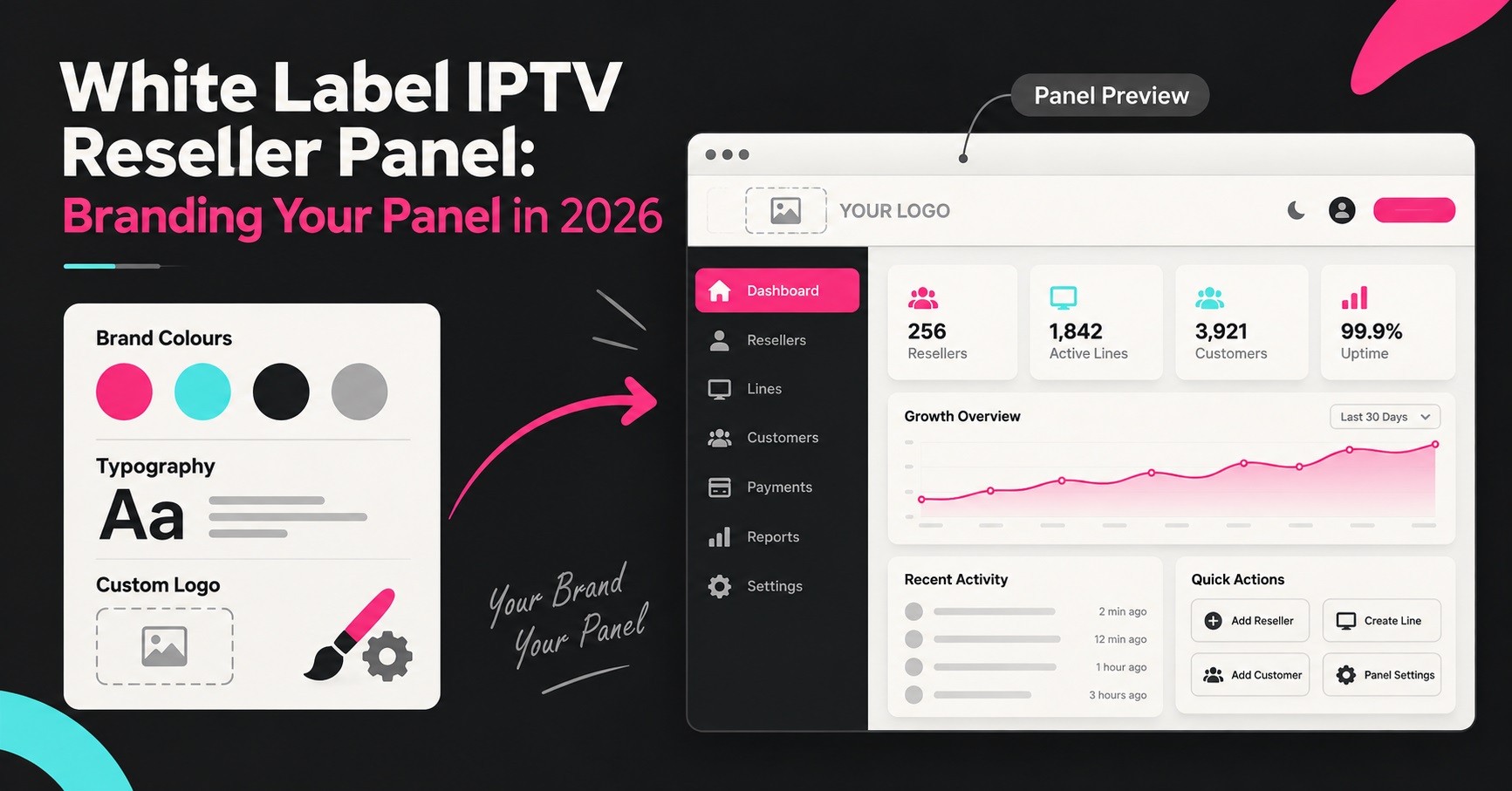
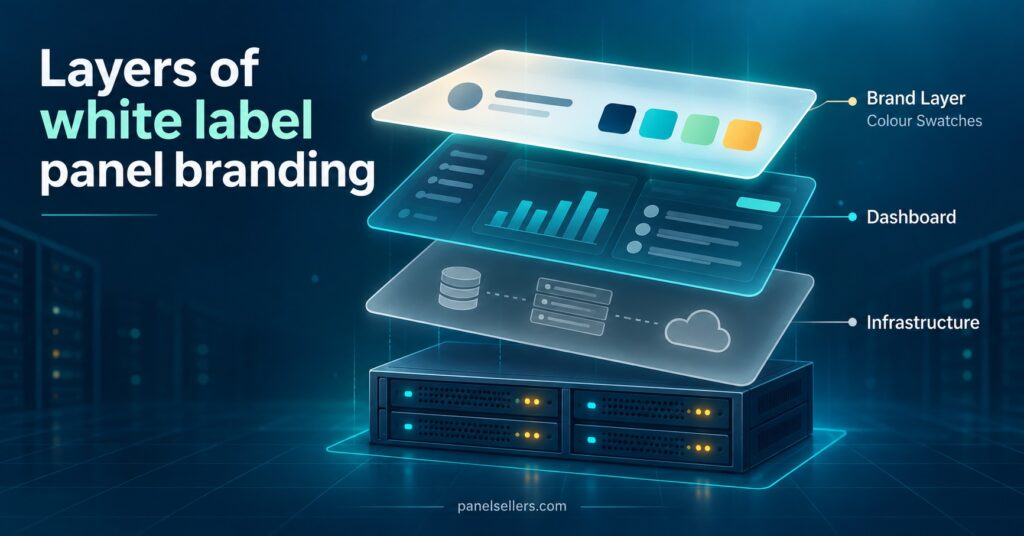
The panel itself is software. Most reseller panels in circulation are built on the same handful of management systems, which is why so many dashboards look near identical once you log in. White labelling sits on top of that: a custom logo, a colour scheme, a login page at your address rather than theirs, sometimes custom email templates for account credentials.
Beyond the interface, a fuller arrangement can extend to the customer-facing side. That includes a portal your subscribers visit to check their expiry, playlist links that resolve through a hostname you control, and an application carrying your name rather than a generic player. Each of these sits at a different price point and a different level of technical involvement, and providers rarely spell out which one they are actually selling.
Ask for specifics before agreeing to anything. A vague promise of “full branding” tells you nothing about which layer is included.
Reseller-Facing Branding Versus Subscriber-Facing Branding
This distinction catches out more new resellers than any other, and it is worth getting straight early.
Reseller-facing branding rebrands the dashboard you personally log into. Your logo appears at the top, the URL might carry your name, and the whole thing feels like your own system. The problem is obvious once stated: your customers never see that dashboard. Only you do, and possibly your sub-resellers. It is a working environment, not a shopfront.
Subscriber-facing branding is the part with commercial value. When a customer receives their credentials, loads a playlist, opens an app, or visits a page to renew, those moments are where your brand either exists or does not. If your logo sits proudly on a dashboard nobody else logs into while your customers receive a playlist link pointing at someone else’s hostname, you have paid for decoration.
When a provider quotes a branding fee, the single most useful question is which of these two they mean. Some sell only the first while describing it in language that implies the second. Reviewing what a dashboard genuinely controls is easier once you understand which IPTV reseller panelfeatures carry real operational weight and which are presentation.
The Details That Give the Upstream Provider Away
Even a competent white label setup leaks in places most people never check, because branding is applied at the visible layer while the technical plumbing stays as it was.
The playlist or portal URL is the usual culprit. A customer who pastes a link into a player can read the hostname in that link, and if it belongs to your supplier rather than to you, the arrangement is transparent to anyone paying attention. The same applies to the address a set-top box loads its portal from, and to the endpoints an app queries in the background. If you want to understand where those addresses come from and why they behave the way they do, our explanation of how the Xtream Codes API structure works covers the mechanics.
Certificates and DNS records are the second layer. A domain pointed at a shared server will often present a certificate naming that server, and public DNS lookups show where a hostname resolves. None of this matters to a casual customer. It matters a great deal to a competitor sizing you up, or to a customer who suspects they are paying a markup on something they could buy directly.
Then there are the human touchpoints. Support replies sent from a generic address, invoices carrying an unfamiliar company name, renewal instructions that send customers to a website you do not control. Each one undoes the branding you paid for.
| Customer touchpoint | Usually brandable | What to verify |
|---|---|---|
| Playlist and portal URL | Sometimes, at higher tiers | Whether the hostname uses your domain or theirs |
| Credential email | Usually | Sender address, footer text, support contact |
| Renewal or account page | Sometimes | Where customers are sent to extend a subscription |
| Application on device | Depends on the app | Whose name appears in the store listing and splash screen |
| Support conversations | Always, because it is yours | Whether you or the provider replies to end users |
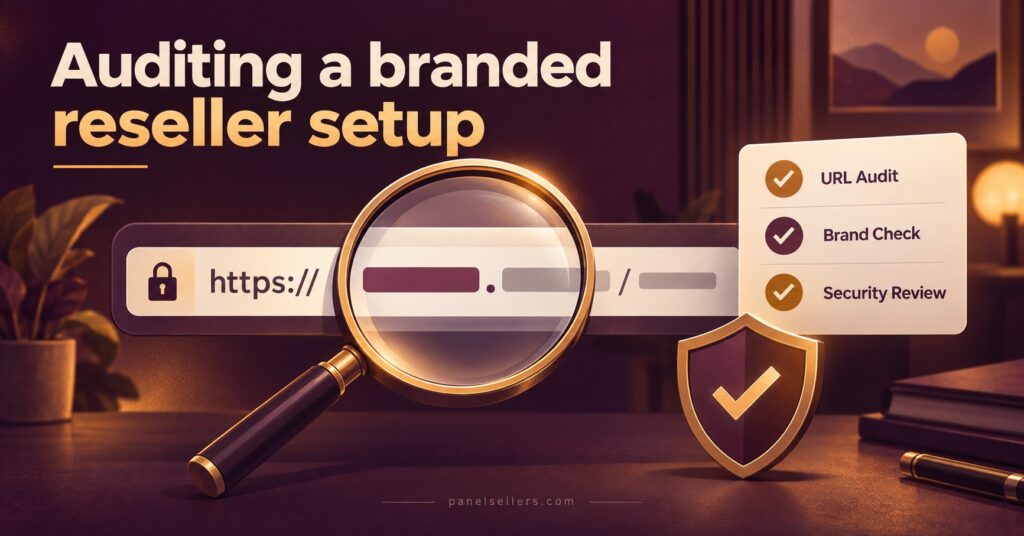
Pro tip: Set up a test line for yourself, load it exactly as a customer would, and read every URL and message you receive along the way. Anything that names a company other than yours is a gap in the branding you were sold.
Three Levels of White Labelling, and Who Each One Suits
Rather than treating branding as a yes or no purchase, it helps to think in tiers.
Level one: a skinned dashboard
Your logo and colours on the management interface, possibly reachable at a subdomain you own. Cheap, quick, and mostly cosmetic. It suits a reseller who wants a tidier workspace or who plans to bring sub-resellers in and would rather they saw a consistent brand while working. It does very little for end customers.
Level two: branded portal and custom domain
Here the customer-visible layer moves onto a domain you control. Credentials arrive from your address, account pages carry your name, and playlist hostnames may be reconfigured to match. This is the point where branding starts to protect margin, because a customer who cannot easily identify your supplier cannot easily bypass you. It also introduces real responsibilities: you now own a domain, its renewal, and its reputation.
Level three: branded application and billing
The most complete arrangement adds an application carrying your name and a payment flow that presents your business rather than a third party. It is also the most demanding. Applications distributed through app stores face review policies that change, developer account requirements, and the ongoing burden of updates. Payment presentation depends on your own merchant arrangements. Anyone considering this level should be confident their operation will still exist in a year, because the setup effort only pays back over time.
Most resellers are best served at level two. Moving to level three before you have a stable customer base tends to create maintenance work that outweighs the branding benefit. If you are still deciding where you sit, working through a IPTV reseller paneldemo before committing to a package will tell you more than any feature list.
What Comes With Your Logo That Nobody Mentions
Branding shifts perception, and perception carries obligation.
Once your name is on the service, you are the company customers complain to. Buffering during peak hours, a channel that disappears from a lineup, an account that stops working at an inconvenient moment: all of it arrives in your inbox, regardless of whether the cause sits three layers upstream in infrastructure you cannot inspect or fix. Unbranded resellers can point to a supplier. You cannot, because you removed the supplier from view.
That trade is usually worth making, but only if you have a realistic support arrangement behind you. A provider who takes eight hours to respond to you becomes a provider who takes eight hours to respond to your customers, with your name absorbing the delay.
There is also a portability question. Branding does not create ownership. If the relationship with your supplier ends, your logo does not carry the customer base across on its own. What carries it across is a customer list you actually hold, with contact details and expiry dates, stored somewhere outside the panel.
Pro tip: Export your customer records on a fixed schedule and keep them in your own storage. A branded panel you cannot log into is worth nothing, and the moment you need that export is usually the moment you cannot get it.
Questions Worth Asking Before You Pay a Branding Fee
Providers answer direct questions honestly more often than people expect. The trouble is that most buyers never ask them.
Who registers the domain used for branding, you or the provider? If the answer is the provider, you are renting your own brand back from them.
Is branding applied once at setup, or maintained through panel updates? Some skins break when the underlying software is updated and stay broken until someone rebuilds them.
Does the branding extend to sub-reseller accounts, and can each sub-reseller carry their own identity, or do they inherit yours?
What is the recurring cost, separate from any setup fee, and does it change if line counts grow?
If you migrate away, what happens to customer records, and in what format are they returned?
Signs the Offer Is Only Cosmetic
Some patterns come up often enough to treat as warnings.
A provider who will brand a login page but cannot discuss playlist hostnames is selling wallpaper. So is one who insists renewals must happen through their own website, since that single step exposes the entire arrangement to every customer at the exact moment they are deciding whether to continue paying you.
Be cautious where branding is described enthusiastically but never demonstrated. A screenshot of a skinned dashboard proves the easy part. Ask to see a customer-side example instead: a credential email, a portal page, a playlist link with identifying detail redacted.
Finally, treat a polished sales website as evidence of nothing in particular. Presentation is inexpensive. What matters is what the service does when a customer’s account stops working at ten on a Saturday night.
It is also worth stating the neutral position plainly. IPTV is a delivery technology, and whether any given service is lawful depends on distribution rights and permissions held for the content being carried. Applying your own branding to a service changes none of that. If anything, it raises the stakes, because your name is now the one attached to whatever the underlying arrangement turns out to be. Satisfy yourself about your supplier’s position before you put your brand on top of it.
Frequently Asked Questions
Does white labelling mean I own the panel software?
No. You are licensed to present a branded version of software that remains the provider’s. Ownership of the codebase, the servers and the infrastructure stays where it was. This is worth understanding before you build a business plan around the assumption that the panel is an asset you hold.
Can customers still find out who my supplier is?
Sometimes, depending on how thoroughly the setup was done. Hostnames in playlist links, DNS records and certificate details can all reveal the origin to anyone who looks. Full concealment is difficult and rarely absolute, so treat branding as friction rather than a wall.
Is a custom domain necessary?
For anything customer-facing, it is close to essential, because a domain is the one part of the arrangement you can genuinely own. Register it yourself rather than letting a provider register it on your behalf, so that changing suppliers does not mean changing your brand.
Will branding let me charge more?
It can support a higher price, since a service that looks established is easier to sell than a forwarded set of credentials. It does not create value on its own. Price still rests on reliability and on how quickly you answer people when something breaks.
Should a new reseller pay for branding immediately?
Usually not on day one. Confirm that the underlying service is stable and that your supplier responds properly before adding a layer that makes you the sole point of contact for every problem. Branding an unreliable service accelerates damage to a name you were hoping to build.
Can sub-resellers have their own branding under mine?
Some panels allow it and many do not. Where it exists, it tends to sit at a higher tier and adds administrative work for you. Ask specifically, because a general promise of branding rarely covers accounts beneath your own.
Making the Decision
A White Label IPTV Reseller Panel is worth paying for when it removes your supplier from the parts of the service your customers actually touch, and it is a waste of money when it only decorates a dashboard you look at alone. Judge any offer by the customer journey rather than by the sales description: the email they receive, the link they paste, the page they visit to renew, the person who replies when something fails. If your name is present at each of those points and your supplier’s is not, the branding is doing its job.
Start by mapping which touchpoints in your current setup still carry someone else’s name. That list, rather than a provider’s feature summary, tells you what you need to buy and what you can safely skip. If none of them do, you already have what most branding packages are sold to achieve.