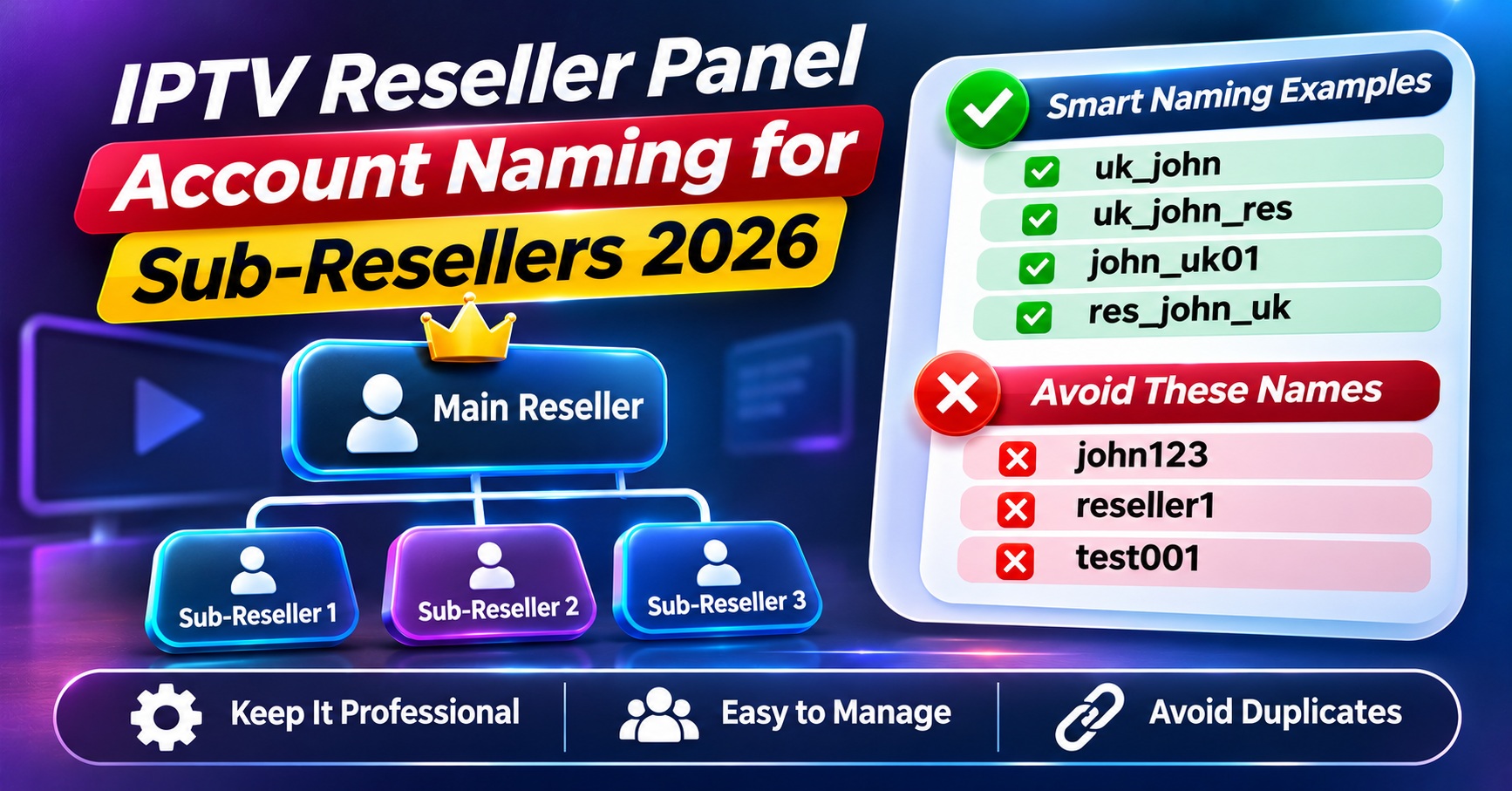

Good IPTV Reseller Panel Account Naming comes down to one rule: a username should mean something to you and nothing to anyone else. Use a short prefix of your own followed by a running number, such as kra10427, keep it lowercase with no spaces or symbols, and hold the customer’s name, phone number and email in your private records instead of inside the username.
A username in a reseller panel isn’t a private label. It gets typed into apps, embedded in playlist links, pasted into support chats and listed on the server of whoever supplies your credits. Name a line after the customer and their identity follows the line everywhere it goes. Give it a neutral code and the only place that code becomes a person is your own spreadsheet, which is exactly where it should happen.
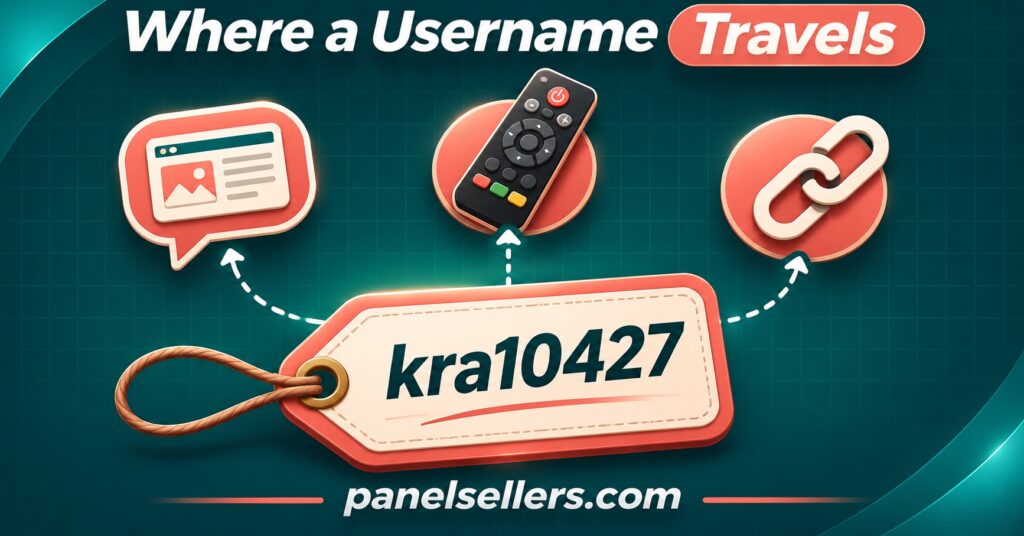
Where an Account Name Travels After You Press Create
Most panels built on the Xtream Codes style of login issue each line a username and a password, and neither stays inside the dashboard for long. When a customer uses a playlist link, both values usually sit in plain text inside the web address, as username and password fields at the end of a get.php link. Anyone who sees that link, in a forwarded message or a shared notes app, sees the name too.
Then there are the screens. Player apps show the login on setup, so the relative who installs the device and the friend who borrows it both see the username. Customers who need help send screenshots of error messages, and those screenshots frequently include the login fields. Above you, the provider or parent reseller can normally view every line created on their server, yours included. Below you, sub-resellers see whatever you create in their space. And a streaming stick sold second-hand may still carry the old profile.
So the useful question when naming a line isn’t “what will help me find this customer later?” It’s “what would I be comfortable with a stranger reading off a television screen?” Those two needs are both legitimate, but they belong in different places.
Building an IPTV Reseller Panel Account Naming Pattern That Scales
A naming pattern only works if every line follows it, which means it has to be simple enough to apply without thinking. Three parts are usually enough.
A short prefix that belongs to you
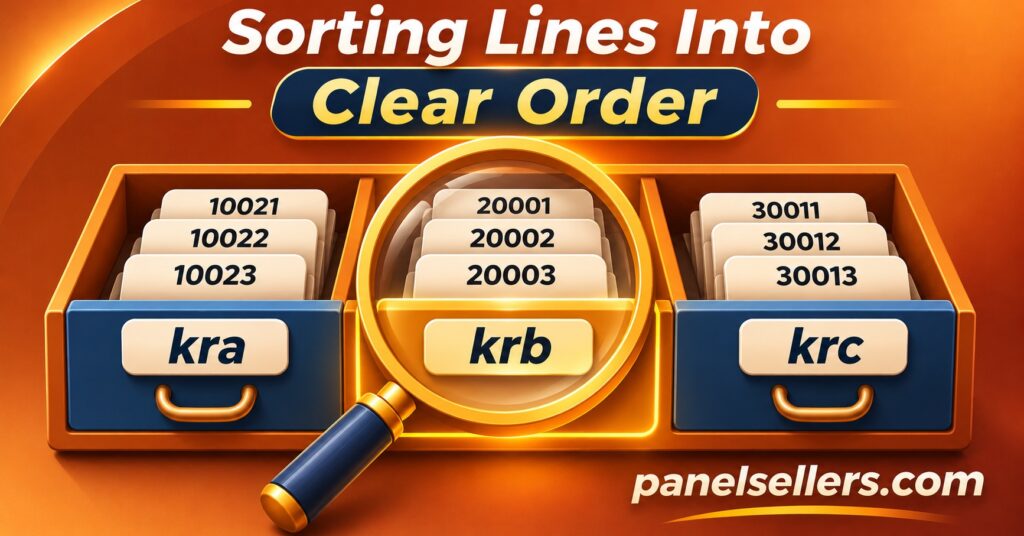
Two or three letters, chosen once and never changed. The prefix keeps your lines recognisable in any list where they sit next to other people’s, and it gives you a reliable search term inside the panel. If you plan to bring on sub-resellers, reserve the last letter as a seller marker now: kra for your own lines, krb for the first sub-reseller, krc for the next. Search “krb” and you’ll see everything that seller has created in one view.
A running number with a fixed length
Number lines in order, padded to the same length. Five digits starting at 10001 gives you tens of thousands of lines before anything changes shape, and fixed length keeps lists sorting properly. Resist the urge to build meaning into the digits. The last four digits of a phone number, a house number or a birthday all feel harmless, but each one is a fragment of personal data that can be pieced together with other fragments.
A type marker, used carefully
Some IPTV panel resellers add a letter for trial lines. It’s tidy until a trial converts to a paid subscription, because on many panels the username carries over unchanged, and you’re left with a paying customer labelled as a trial for the life of the account. If you use a marker at all, choose one for a property that never changes.
Anything that changes over time should stay out of the name entirely: the package, the expiry month, the device, the town. A username saying “firestick” becomes wrong the day the customer upgrades their television.
| Problem username | What it gives away or breaks | Neutral alternative |
|---|---|---|
| sarahjones | The customer’s full name | kra10427 |
| sam07700 | First name plus part of a phone number | kra10428 |
| leedsstick2 | Location and device, both of which change | kra10429 |
| markjan27 | First name and an expiry date that’s wrong after renewal | kra10430 |
A Worked Example for a Growing Operation
Picture a hypothetical reseller running about two hundred lines with two sub-resellers. Every line they create starts kra followed by a five-digit number. Their first sub-reseller creates krb lines, the second creates krc lines, and each seller keeps their own running count starting at 10001. Nobody has to coordinate numbers with anyone else, because the prefixes never overlap.
Behind the panel sits one private spreadsheet. Each row holds the username, an internal customer reference, the contact method, device notes, the start date and the current expiry. The panel holds the line; the spreadsheet holds the person. When a customer messages for help, the reseller looks up the username in the spreadsheet rather than asking the customer to repeat their details in an open chat.
That consistency pays off elsewhere too. Matching lines against credits becomes far quicker when every account follows the same shape, which is the groundwork for reconciling panel credits before each top-up. Renewal reminders become easier to automate when the username is a clean key that links straight to a spreadsheet row, as covered in the guide to setting up IPTV reseller panel expiry alerts.
The reseller in this example also keeps a one-page house rule that every seller receives on day one:
- Prefix plus five digits, nothing else, all lowercase
- No names, initials, phone digits, towns, devices or dates in the username
- Customer details go in the private spreadsheet only
- Passwords are generated randomly and never follow the username
- New prefixes for new sub-resellers are issued by the main account, not chosen by the seller
Keeping Personal Details Out of the Panel Altogether
The username isn’t the only place personal data creeps in. Many panels offer a notes or comment field on each line, and it’s tempting to drop a phone number or full name there for convenience. Those notes are frequently visible to the panel owner above you and can turn up in exports. Treat the notes field as operational only: “device replaced October” or “prefers WhatsApp” is fine, a mobile number isn’t.
For resellers serving UK customers, this lines up with a principle that already applies to the business. The UK’s data protection regulator explains data minimisation as the requirement under Article 5(1)(c) of the UK GDPR that personal data should be adequate, relevant and limited to what’s needed for the purpose. The ICO’s guidance on data minimisation is worth reading in full. Resellers in other English-speaking countries work under different privacy laws, but the practical logic holds everywhere: data that never enters the panel can’t leak from it. None of this is legal advice, and a business handling customer data at scale should check its obligations properly.
A word on scope as well. Tidy account naming makes a reseller operation more professional, but it says nothing about content rights. A panel is management software, and whether a service is lawful depends on the distribution rights held by the provider delivering the content.
Collisions, Characters and the Server-Wide Problem
On many panels, a username has to be unique across the entire server rather than just within your own reseller account. That’s why obvious names like “john” or “test1” are often rejected: someone else on the same server took them long ago. A personal prefix solves most of this, but it’s worth checking before you commit.
Pro tip: Before adopting a prefix, search the panel’s line list for it. If results appear that you didn’t create, or the panel refuses a test name using that prefix, pick another combination now rather than discovering the clash at line three hundred.
Characters matter more than people expect. Stick to lowercase letters and digits. Spaces and symbols such as &, ?, # and % carry special meanings in web addresses and can break playlist links in ways that look like a service fault. Some player apps treat usernames as case-sensitive, so mixing capitals invites login failures that are tedious to diagnose over chat.
Think about the person typing it, too. Customers often enter a username with a TV remote, letter by letter, on an on-screen keyboard. Characters that look alike, such as zero and the letter o, or one and a lowercase l, cause failed logins that generate support messages. Keeping letters in the prefix and digits in the number avoids most of that confusion. As a working range rather than a rule, seven to nine characters tends to be long enough to stay unique and short enough to type with a remote without frustration.
Moving Old Accounts Onto the New Convention
Most resellers reading this already have lines named the old way. Renaming them all at once is rarely a good idea. Many panels don’t allow a username to be edited after creation, and where they do, the change usually breaks the saved login on every device the customer owns. A bulk rename on a Friday evening turns into a weekend of support messages.
A calmer approach is to apply the new pattern to every new line from a fixed date, then move older lines across at natural touchpoints: a renewal, a device replacement, or a customer getting in touch about something else. Give the customer notice, send the new details through your usual private channel, and record the old and new usernames side by side in your spreadsheet so the history isn’t lost.
Before migrating anything, ask your provider how their panel handles it. Recreating a line may consume credits or reset an expiry date on some systems, and it’s far better to know that than to assume. If you’re unsure how lines, credits and orders fit together in the first place, the overview of how the panel ordering process works is a sensible starting point.
The Password Is a Separate Decision
A neutral, sequential username is predictable by design. If kra10427 exists, kra10428 probably does too. That’s perfectly acceptable as long as the password does the protecting. Generate passwords randomly for each line, never base them on the username, and never reuse a pattern such as the username followed by a fixed word. A predictable username paired with a predictable password lets anyone who has one customer’s login guess another’s.
Settling on a Convention Before the Next Hundred Lines
IPTV Reseller Panel Account Naming is one of those decisions that costs nothing on day one and a great deal at line five hundred if it’s left to chance. Choose a prefix, fix the number length, keep every personal detail in records only you control, and write the rule down so sub-resellers follow it from the start. The pattern won’t make your service more reliable on its own, but it will make it easier to support, reconcile and grow without customers’ identities scattered across screens and screenshots.
Questions Resellers Ask About Naming Lines
Should customers choose their own username?
It’s generally better not to. Customers tend to pick their own name or a nickname, which defeats the point, and your list loses its consistency. Issue the code yourself and explain that it keeps their details private.
Can I use my brand name as the prefix?
You can, but brand names are usually long and awkward to type with a remote, and a rebrand leaves every old line carrying the previous name. A short, abstract prefix ages better.
What if a customer asks why their login is just a code?
Tell them the truth: the username appears in links, on screens and in support screenshots, so leaving their name out protects them. Most people appreciate that once it’s explained.
Do sub-resellers have to follow my scheme?
Panels typically let sub-resellers name their own lines, so the scheme only holds if you make it part of your agreement with them. Issuing each seller a prefix before they create their first line is the simplest way to enforce it.
Is it worth renaming a line that already works?
Usually only at a natural touchpoint. A working line with an imperfect name is less of a problem than a customer locked out on a busy evening because their login changed without warning.