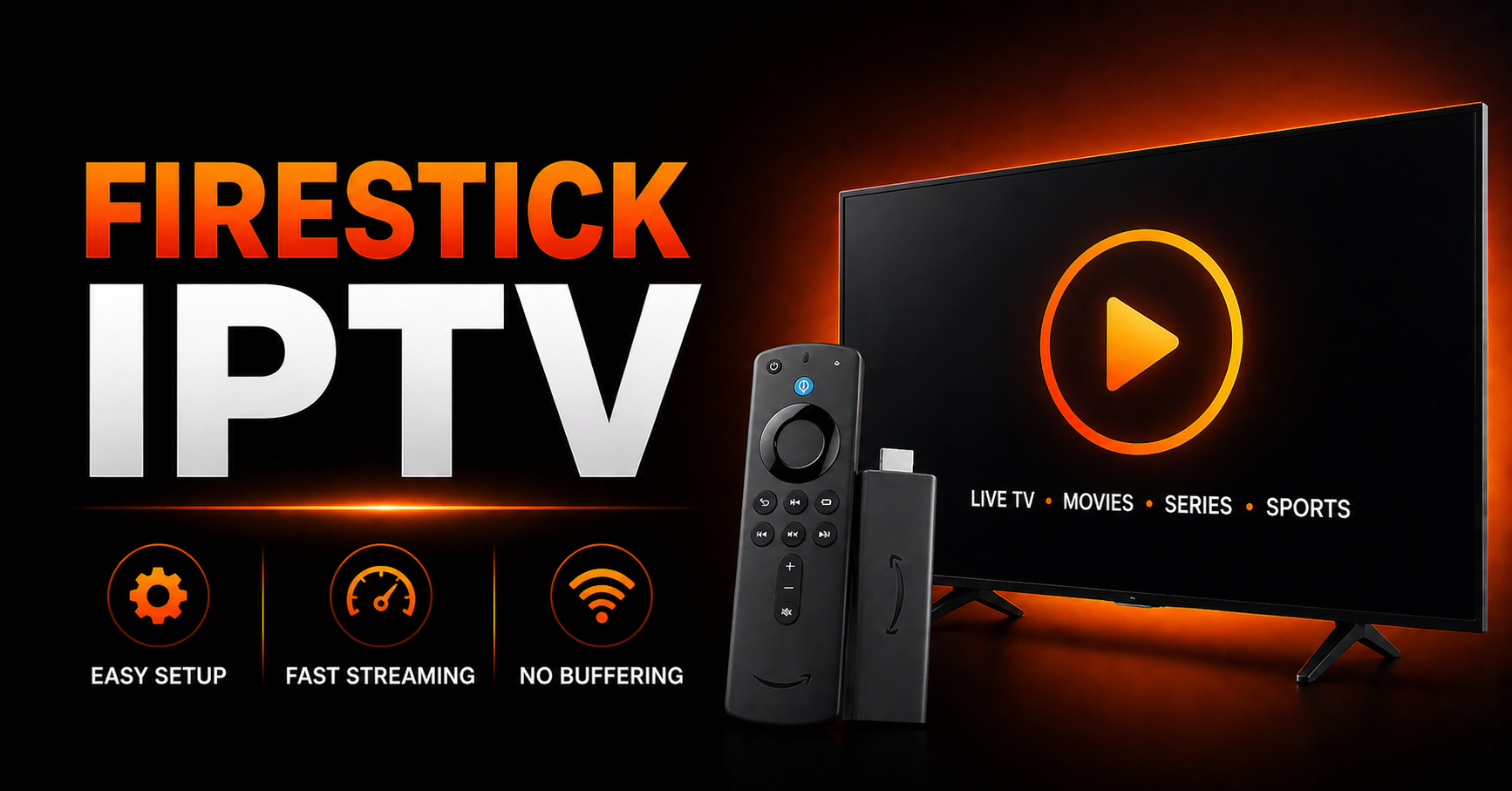

Firestick IPTV: Why It Buffers and How to Fix the Real Causes
Most people setting up Firestick IPTV for the first time follow the same recycled tutorial. Download an app. Paste a URL. Press play. And then spend the next forty minutes troubleshooting why a match that kicked off live is buffering at 480p on a 200Mbps connection.
The problem was never the device. Firestick IPTV issues almost always trace back to decisions made before the stream ever loads, panel infrastructure, DNS configuration, app selection, and the UK IPTV reseller you chose without actually vetting them. This guide covers the operational reality, not the surface-level advice.
Why Firestick IPTV Buffering Has Nothing to Do With Amazon
This one trips up newcomers constantly. The Firestick is a capable streaming device. Its processor handles 4K without complaint, and its network stack is stable. When Firestick IPTV starts buffering, the device is the last place to look.
What you’re actually dealing with is HLS latency, the gap between when a stream segment is generated on the server and when it reaches your player. On a properly configured IPTV panel, that gap is under two seconds. On oversold infrastructure, it compounds. By the time it reaches your Firestick, a ten-second buffer gap becomes a minute of frozen screen or outright crash.
The variable that matters is transcoder load on the provider’s side. A reseller running 500 connections through a server spec’d for 200 will experience degradation regardless of what device the customer uses. Firestick, Android TV box, Smart TV, all freeze equally under that condition.
Pro Tip: Ask your IPTV Panel reseller how many active connections their servers support at peak and what their oversubscription ratio is. Any reseller who can’t answer that question is running on borrowed time, and your subscription will pay for it.
The DNS Issue Behind Half of All Firestick IPTV Connection Failures
DNS poisoning is not theoretical in 2026. It is an active enforcement tactic used by ISPs in the UK, Germany, Australia, and increasingly across Southeast Asia. The mechanism is simple: your ISP intercepts the DNS query made by your Firestick IPTV app before it reaches the stream server, and redirects it, either to a block page or nowhere.
Most users interpret this as “the IPTV stopped working.” What actually happened is their DNS resolution was hijacked.
The fix is a manual DNS override at the network level. On a Firestick, you can set custom DNS directly inside Wi-Fi settings:
- Navigate to Settings > Network > Your Wi-Fi connection
- Select Advanced Options
- Switch IP Settings to Static
- Replace DNS 1 and DNS 2 with your preferred resolver (1.1.1.1 or 8.8.8.8 as baseline, or a private resolver if your provider supplies one)
This single change resolves a surprisingly high percentage of Firestick IPTV connection failures that get blamed on the panel or the reseller.
Pro Tip: ISP-level DNS blocking is increasingly fingerprint-based, not just domain-based. A provider using IP rotation with no corresponding DNS update will still get caught. Quality IPTV infrastructure rotates both simultaneously.
App Selection for Firestick IPTV: The Performance Tiers You Need to Understand
Not all IPTV players behave the same on Amazon hardware. The Firestick runs a heavily modified version of Fire OS, which handles memory management differently from stock Android. An app that performs flawlessly on a phone can become unstable on a Firestick after ninety minutes of continuous streaming.
| Feature | Low-tier player | Mid-tier player | Operator-grade player |
|---|---|---|---|
| Buffer management | Single buffer | Adaptive buffer | Multi-thread plus cache |
| EPG handling | External only | Basic built-in | Synced, low memory |
| Reconnection logic | Manual restart | Basic auto-retry | Intelligent failover |
| HLS/MPEG-TS support | HLS only | Both, limited | Full codec stack |
| Memory on Firestick | Crashes after 1 to 2hr | Stable 3 to 4hr | Extended stable |
| Catch-up support | None | Basic | Full VOD integration |
The player tier matters most for Firestick IPTV because Amazon devices have conservative memory limits compared to dedicated Android TV boxes. An app that isn’t optimised for low-memory environments will degrade over a viewing session.
Panel Credits, Reseller Margins, and What Actually Funds Quality Infrastructure
Here is something the average subscriber never thinks about but every reseller understands intimately: the quality of your Firestick IPTV stream is directly connected to how much margin exists between what the panel charges resellers per credit and what the reseller charges you.
A reseller buying credits at rock-bottom rates from a mass-market panel is almost certainly reselling capacity from an oversold server cluster. The economics don’t leave room for redundancy, backup uplink servers, or proper load balancing. That reseller is selling you capacity they don’t fully control.
Resellers purchasing from panels with higher credit costs typically have access to better infrastructure, dedicated IP ranges, geographic CDN routing, and what matters most for Firestick IPTV users: uptime SLA commitments that get enforced.
When evaluating a reseller for Firestick IPTV use, the questions worth asking:
- Do they operate backup uplink servers or rely on a single CDN?
- Is there a redundant connection path if the primary goes down?
- What is their average downtime per month, not their claimed uptime?
- Do they offer connection testing before purchase?
Pro Tip: A reseller who offers a 24-hour trial without requiring payment upfront is signalling confidence in their infrastructure. One who refuses trials entirely is often protecting against churn from customers who discover instability quickly.
AI-Driven ISP Blocking in 2026 and What It Means for Firestick IPTV
The enforcement landscape has changed materially since 2023. ISPs are no longer relying solely on static IP blacklists. The new enforcement layer uses AI-assisted deep packet inspection, analysing traffic patterns in real time to identify and throttle streams that match IPTV delivery signatures, even when the destination IP has never been blocked before.
For Firestick IPTV users, this means:
- Streams that worked yesterday may fail today with no apparent change
- VPN usage is increasing among stable subscribers, not just privacy-focused ones
- Providers using dynamic IP rotation without pattern variance are getting caught faster
- Ports associated with IPTV traffic (typically 8080, 80, and 443 on non-HTTPS stacks) are being selectively throttled
Quality IPTV panels have begun responding with encrypted delivery paths and port variance. The better resellers push these updates downstream. The lower-tier operations don’t adapt and quietly absorb churn.
If you are running Firestick IPTV for a household and experiencing intermittent issues that don’t follow a predictable pattern, AI-assisted ISP throttling is now a legitimate diagnosis, not a conspiracy theory.
Sideloading on Firestick IPTV: What Amazon Doesn’t Tell You About Background Process Limits
Amazon’s Fire OS does something no other Android-based platform does quite the same way: it aggressively manages background processes to prioritise its own native apps. This creates a specific problem for Firestick IPTV setups using sideloaded players.
When you open Prime Video or any native Fire TV app after running your IPTV player for an extended period, Fire OS may deprioritise your sideloaded app’s network threads. The practical result is stream interruption that looks like a server-side issue but is actually a process priority conflict on the device itself.
The operational fix:
- Disable background data for apps you don’t actively use (Settings > Applications > Manage Installed Applications)
- Enable ADB debugging and clear the app cache for your IPTV player weekly
- Avoid running your IPTV player while other streaming apps are in background-suspended state
- If using a 1st or 2nd gen Firestick, consider an upgrade, the RAM limitation is real and directly impacts Firestick IPTV stability
Pro Tip: The Firestick 4K Max handles concurrent background processes significantly better than older models. For households watching three or more hours of IPTV daily, the hardware upgrade pays for itself in reduced troubleshooting time alone.
Reseller Panel Setup: Configuring Firestick IPTV Connections at Scale
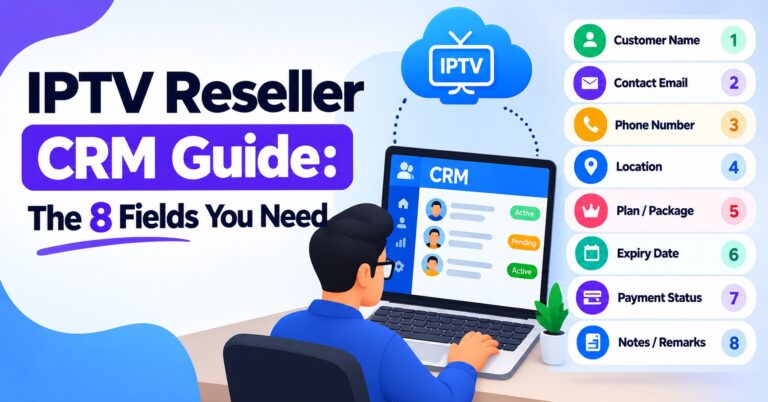
If you are a reseller distributing Firestick IPTV access to multiple customers, the configuration decisions you make at the panel level have downstream consequences that compound.
The most common mistake resellers make is issuing all connections under a single M3U URL with no connection-level segmentation. When one customer’s Firestick hammers the server with EPG refresh requests every sixty seconds, it degrades the experience for every other connection on that line group.
Structuring Firestick IPTV connections properly at the reseller level means:
- Issuing unique M3U or Xtream Codes credentials per customer (not shared URLs)
- Setting EPG refresh intervals at the panel level, not leaving it to customer apps
- Monitoring simultaneous connection counts per subscription tier
- Keeping a buffer of unused panel credits as headroom during peak periods (major sports events, for instance, spike concurrent connections unpredictably)
Load balancing across multiple server groups is available on most modern panels but is rarely configured by new resellers because it requires understanding traffic distribution logic. Resellers who invest time in that configuration see dramatically lower churn from Firestick IPTV customers during high-demand events.
Customer Churn Psychology: Why Firestick IPTV Subscribers Leave When They Shouldn’t
Here is a dimension most reseller guides ignore entirely: customers who experience one bad Firestick IPTV session during a live sporting event will not complain and wait. They leave. Immediately. And they tell two or three people.
The churn trigger is almost never consistent buffering, it is unexpected buffering at a high-stakes moment. A subscriber who experiences minor issues during standard programming may stay indefinitely. The same subscriber who loses the picture for three minutes during a penalty shootout is gone by the end of the night.
Understanding this changes how good resellers operate. They:
- Pre-configure backup stream paths before known peak events
- Send proactive communication about server maintenance windows
- Offer one-click connection switching between server groups when one is degraded
- Treat Firestick IPTV support as real-time during major live events, not next-day ticket resolution
The UK IPTV resellers who retain customers long-term are not necessarily running the best infrastructure. They are running adequate infrastructure with exceptional operational awareness around when customers are watching and what they cannot afford to miss.
Firestick IPTV Success Checklist
For Subscribers:
- Set static DNS on your Firestick (1.1.1.1 as minimum baseline)
- Use an operator-grade player with adaptive buffer management
- Clear app cache weekly, especially after long viewing sessions
- Test your reseller with a trial before committing to longer subscription periods
- If on ISPs known for traffic shaping, test with a trusted VPN to isolate the variable
For Resellers:
- Issue unique Xtream Codes or M3U credentials per customer, never shared URLs
- Set EPG refresh intervals centrally, not per-device
- Maintain a credit buffer for peak event periods
- Confirm your panel has backup uplink servers, not just a claimed uptime percentage
- Pre-load backup stream groups before major live events
- Monitor simultaneous connection ratios against server capacity weekly
- Treat Firestick IPTV support as real-time during high-viewership events
Infrastructure Validation:
- Verify your provider rotates IPs and DNS simultaneously, not independently
- Test HLS latency under load, not just during off-peak hours
- Confirm whether your panel uses AI-responsive delivery or static IP infrastructure
- Understand your oversubscription ratio before scaling your customer base
Firestick IPTV is not complicated when the infrastructure behind it is sound. The issues that frustrate subscribers and destroy UK IPTV Panel reseller businesses are almost always systemic, oversold panels, DNS vulnerabilities, unoptimised apps, and resellers who don’t engage operationally. Getting those fundamentals right is what separates a stable IPTV business from one that’s constantly firefighting.