
IPTV Reseller Panel Explained: How It Works
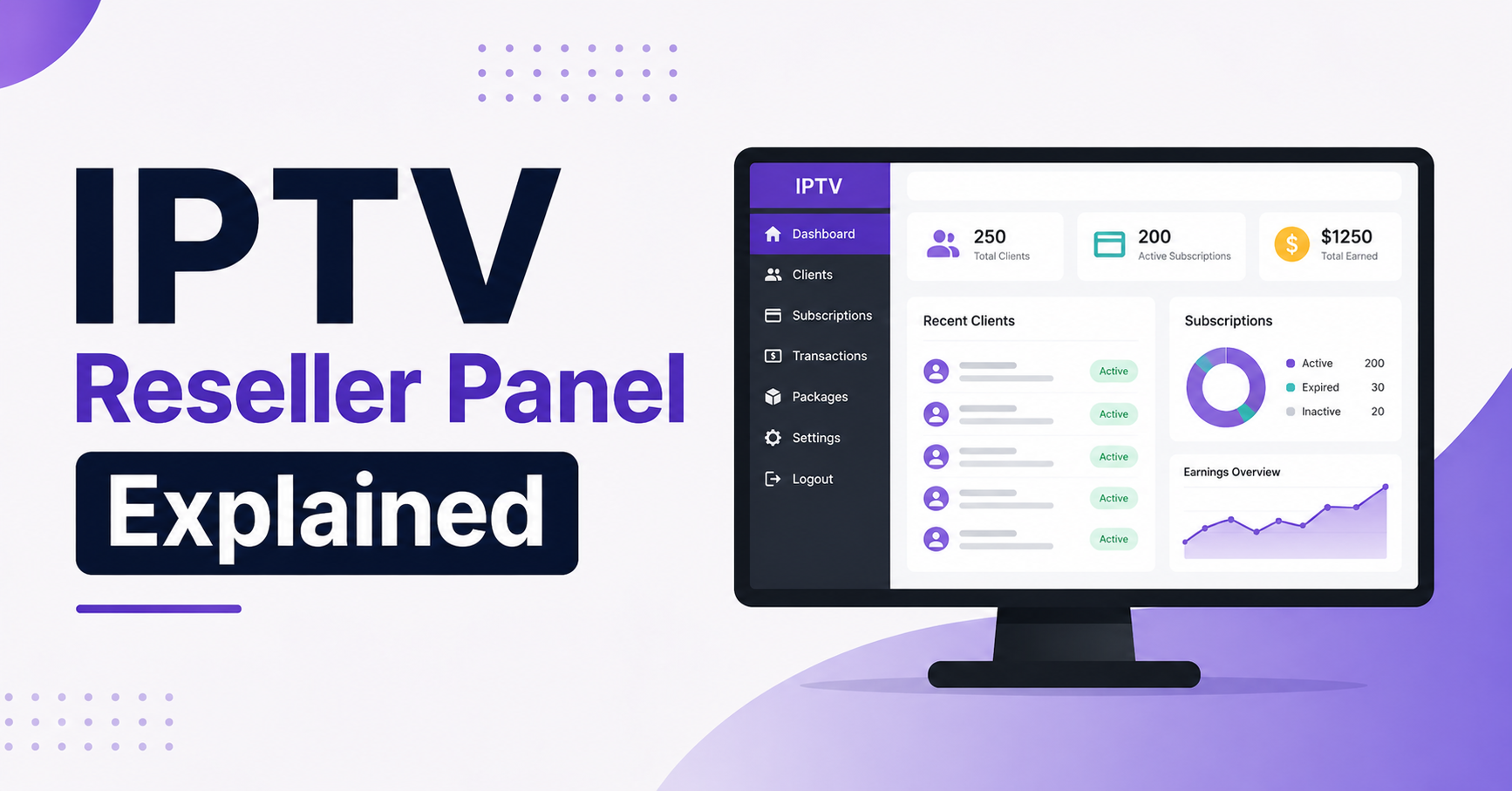
An IPTV reseller panel is a dashboard that lets you buy streaming access in bulk as credits, then turn those credits into individual subscriptions, called lines, that you sell on to your own customers at your own price. Think of it like buying wholesale and selling retail, except everything happens inside one control panel where you create accounts, set how long they last, decide how many devices each one allows, and even hand out smaller chunks of your credit pool to other sellers working under you. That is the whole model in one breath. Everything below just unpacks how each piece actually works.
What an IPTV Reseller Panel Explained in Plain Terms Actually Means
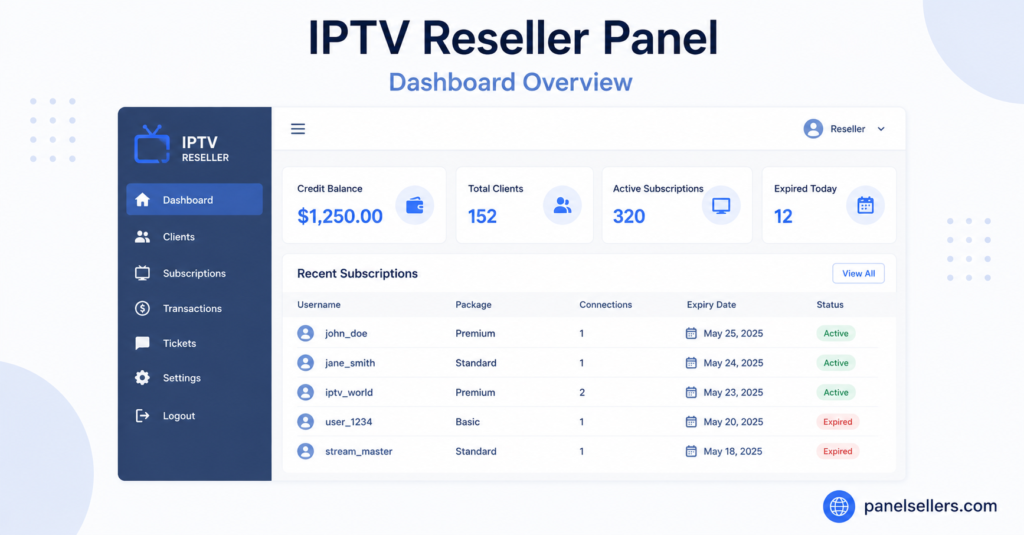
Strip away the jargon and a panel is just software. You log in, you see a balance of credits, and you spend those credits to make subscriptions. Each subscription you generate is a “line,” and a line is what one customer uses to watch on their device. The panel keeps track of who has what, when it expires, and whether it is still active. You are not building servers or writing code. You are renting a seat at someone else’s infrastructure and reselling slices of it. When people say IPTV Reseller Panel Explained in beginner guides, this is the core idea they keep circling back to, because once you understand credits in and lines out, the rest is detail.
The reason this model exists is simple. Running streaming infrastructure is expensive and technical. Most people who want to sell subscriptions have no interest in managing any of that. The panel sits in the middle, letting a small operator behave like a business without owning a single piece of hardware.
How Credits Work Inside the Panel
Credits are the currency of the whole system. You buy them in a batch, and the panel deducts them whenever you create or renew a line. A common setup is that one credit equals a set amount of subscription time, so a year-long line might cost a fixed number of credits while a shorter trial costs less. The exact ratio depends on the provider you buy from.
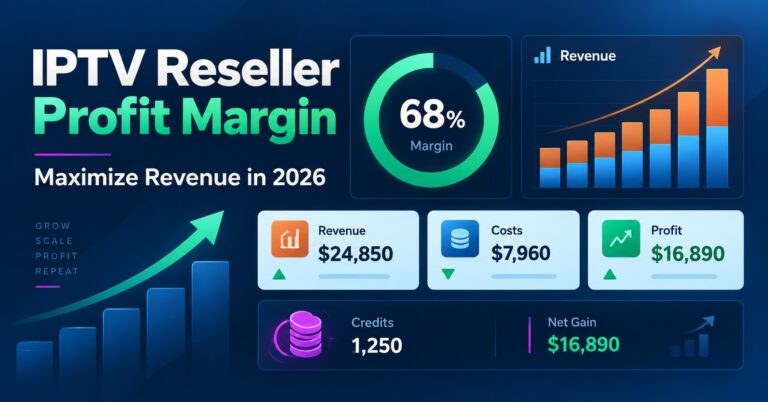
What matters for you is margin. You buy credits at one rate and sell the resulting lines at whatever price your market will bear. If your customers pay you more per line than the credits cost, you keep the difference. This is the entire profit engine, and understanding it is the first real step in any honest IPTV Reseller Panel Explained walkthrough. Providers like the credit packages listed on buy IPTV reseller panel credits pages typically tier their pricing so larger batches drop the per-credit cost, which directly widens your margin as you grow.
Pro tip: Before you buy a big batch of credits, sell a handful of lines first. You want proof that people will actually pay your price before you tie up money in stock you might not move.
What a Line Is and Why It Matters
A line is a single active subscription tied to one set of login details. When a customer pays you, you spend credits to generate their line, then give them their access details so they can watch on their chosen app or device. One line usually maps to one customer, though some setups allow a line to run on more than one device at once, called connections.
The number of connections per line is a real decision, not a technical footnote. More connections means a household can watch on several screens, which you can charge a premium for. Fewer connections keeps things tight and reduces account sharing that eats into your sales. Inside the panel you set this per line, so you control exactly what each customer gets. This granularity is part of why the reseller model scales so well for one person running it alone.
How Sub-Resellers Fit Into the Structure
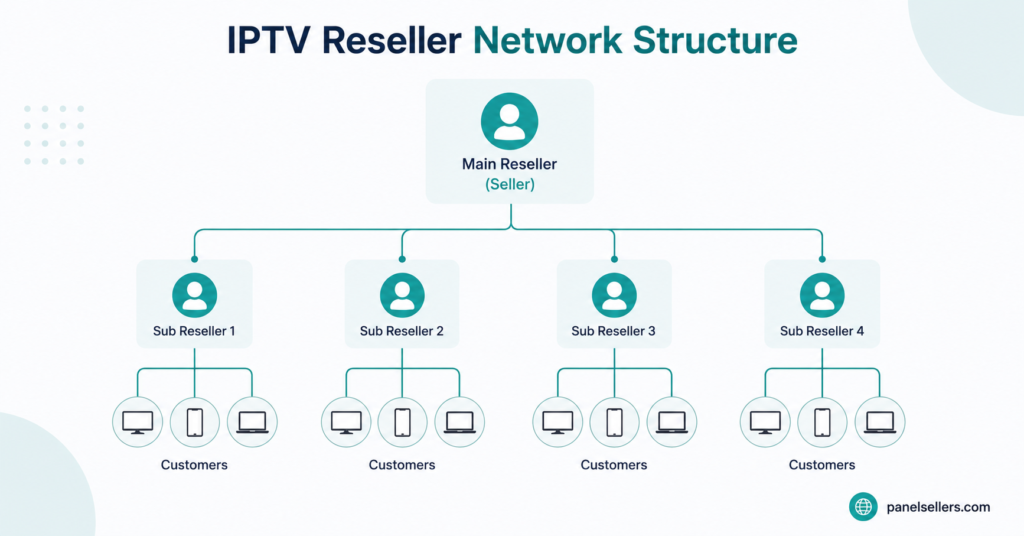
Here is where the model gets genuinely interesting. A panel does not just let you sell to end customers. It lets you create sub-reseller accounts, which are smaller versions of your own panel handed to other people. You give a sub-reseller a portion of your credits, and they sell lines to their own customers without ever touching your supplier.
You stay in control the whole time. You set how many credits they get, you can see their activity, and you can stop their access if you need to. They do the legwork of finding customers, and you take a cut on the credits they consume. This is how a single panel turns one operator into a small network. Most serious IPTV Reseller Panel Explained breakdowns flag this as the moment a side hustle starts behaving like an actual business, because your income stops depending only on hours you personally put in.
Pro tip: Pick sub-resellers who serve a market you do not. Someone selling in a different city or a different language community expands your reach without splitting your own customer base.
Why the IPTV Reseller Panel Model Appeals to New Sellers
The pull is obvious once you see the numbers behind it. There is no inventory to warehouse, no staff to hire on day one, and no infrastructure to maintain. You need a phone or a laptop, a way to take payment, and credits in your panel. That low barrier is exactly why so many people start here.
It is also genuinely flexible. You can run it part time around a job, scale it up when it works, or pause it without penalty since most credit providers operate without contracts. The panels listed on a typical IPTV reseller panel provider show packages aimed at exactly this range, from a starter batch for someone testing the water to larger pools for people running an established operation. The model meets you where you are and grows only as fast as you decide to push it.
That said, low barrier does not mean no effort. The sellers who last are the ones who treat support, reliability, and customer trust as the actual product, not an afterthought.
Comparing Panel Tiers at a Glance
Most providers structure their offering in tiers, and the differences come down to credit volume, sub-reseller access, and management features. The table below shows the typical shape of these tiers so you can see what scales with each step up.
| Tier | Best For | Sub-Reseller Access |
|---|---|---|
| Starter | New sellers testing demand | Usually not included |
| Business | Growing sellers with steady customers | Included |
| Pro | Established operators at scale | Included with multi-panel tools |
The jump that matters most is sub-reseller access, because that is the feature that turns a one-person operation into a network. A starter tier is fine for learning the ropes, but the moment you want others selling under you, you need a tier that supports it. Reading any IPTV Reseller Panel Explained comparison, this is the line item worth focusing on more than raw credit count.
What to Look for When Choosing a Panel Provider
Not all providers are equal, and the cheap ones often cost more in the long run through downtime and dead support. The first thing to check is uptime, because a panel that goes dark takes your customers’ service down with it, and they will blame you, not your supplier. Stable infrastructure is the floor, not a bonus.
Second, look at how fast you actually get help. When a customer messages you at night with a problem, you need your provider reachable, which is why round-the-clock support over channels like WhatsApp matters so much in this space. Third, check activation speed. Instant or near-instant panel access after payment means you are not leaving customers waiting. A solid IPTV reseller panel provider treats all three as standard rather than premium extras, and that baseline is what you should be measuring everyone against.
Pro tip: Test the support response yourself before you commit. Send a question as a prospective buyer and time the reply. How they treat you now is how they will treat you when you depend on them.
The Legal Grey Area, Honestly
This deserves a straight answer rather than a dodge. The reseller panel model itself, buying credits and managing subscriptions through a dashboard, is just software and a business arrangement. Where things get murky is the content flowing through some of these services. Providers that distribute access to channels or events they do not hold the rights to are operating in clearly unlicensed territory, and that exposes everyone in the chain, including resellers.
The honest position is that the infrastructure and the dashboard are neutral tools, while the legality depends entirely on what content rights sit behind the service. Legitimate operators in this space focus on properly licensed content and are transparent about it. If you are entering the market, the responsible move is to understand exactly what you are reselling and to favour suppliers who can account for their content rights. A serious IPTV Reseller Panel Explained guide should not pretend this question does not exist, and choosing your supplier with this in mind protects you more than any margin ever will.
How Pricing and Margin Decisions Shape Your Business
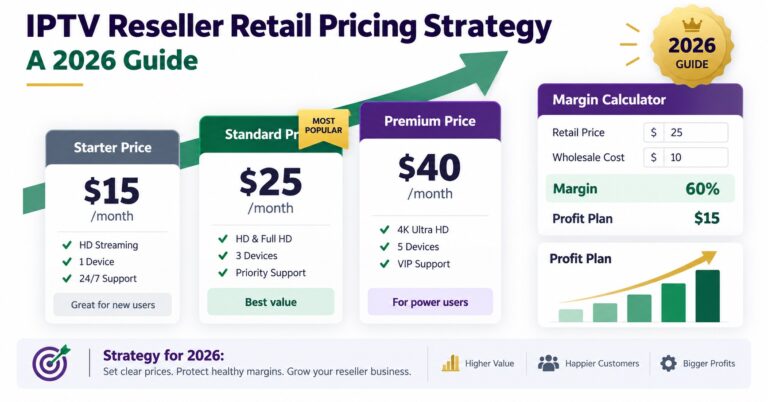
Your pricing is the single biggest lever you control, and most new sellers get it wrong by going too cheap. Undercutting everyone feels like a fast way to win customers, but it traps you in thin margins where one refund wipes out the profit on several sales. The smarter play is to price for the value of reliability and support you provide, then deliver on it.
Work backwards from your credit cost. Know exactly what each line costs you, decide the margin you need to make the effort worthwhile, and set your customer price from there. Larger credit batches lower your per-unit cost, which is why scaling up tends to improve margins rather than just revenue. This is the quiet math that any thorough IPTV Reseller Panel Explained resource keeps returning to, because a business that sells plenty of lines at no margin is just a busy way to lose money.
Common Mistakes New Resellers Make
The biggest one is buying too many credits too early. Excitement leads people to load up on stock before they have proven anyone will buy, and that capital sits frozen. Start small, prove demand, then scale. The second mistake is treating support as optional. In a market where customers can leave anytime, responsiveness is what keeps them, and ghosting a paying customer for a day loses them for good.
The third is ignoring the supplier relationship. Your provider is your lifeline, and a flaky one will sink you no matter how good your customer service is. The fourth is neglecting record keeping. Knowing who expires when, who has paid, and what each line is costing you is basic business hygiene, and panels give you the tools to track it, so use them.
Conclusion
An IPTV reseller panel, at its heart, is a simple idea wearing technical clothing. You buy access in bulk as credits, you turn those credits into lines you sell to customers, and you can hand portions of your credit pool to sub-resellers who build out a network beneath you. The appeal is the low barrier, no inventory, no infrastructure, no contracts, and the freedom to scale at your own pace. The discipline it demands is in the details, smart pricing, reliable support, a trustworthy supplier, and an honest understanding of the content you are reselling and the grey areas around it.
Get the IPTV Reseller Panel Explained fundamentals right, treat your customers as the actual product, and you have a model that genuinely works for one person willing to put in the effort. The panel is just the tool. What you build with it is up to you.
Execution Checklists by Audience
For the Subscriber (the end customer):
- Confirm how many connections your line allows before you buy, so you know how many screens you can use.
- Note your exact expiry date and set a reminder a few days before, to avoid losing access mid-watch.
- Keep your login details private, since sharing them can get your line flagged or cut.
- Test your service on your main device within the first day, so any issue gets sorted while support is fresh.
- Ask your seller their support hours, so you know when help is actually reachable.
For the Reseller (you, running the panel):
- Buy a small starter batch of credits first and sell a few lines before scaling up.
- Calculate your exact cost per line, then set a customer price with real margin built in.
- Test your provider’s support response time before committing to a large purchase.
- Set up a simple record of every customer, their line, expiry date, and payment status.
- Choose a provider with stable uptime and round-the-clock support as non-negotiables.
For the Sub-Reseller (selling under another seller):
- Clarify exactly how many credits you receive and the rate you are charged per line.
- Confirm what happens if you run out, so you are never caught unable to serve a customer.
- Target a market your parent seller does not already cover, to avoid competing for the same buyers.
- Understand your parent seller’s support and uptime, since their reliability becomes your reliability.
- Keep your own customer records separate and organised, even though you sell under someone else.
Frequently Asked Questions
What is an IPTV reseller panel?
It is a dashboard where you buy streaming access in bulk as credits, then convert those credits into individual subscriptions called lines that you sell to your own customers at your own price.
How do credits work in a reseller panel?
You buy credits in a batch, and the panel deducts them each time you create or renew a line. You profit from the difference between what credits cost you and what you charge customers per line.
What is the difference between a reseller and a sub-reseller?
A reseller buys credits directly from a provider and sells lines to customers. A sub-reseller receives a portion of a reseller’s credits and sells under them, while the reseller keeps overall control.
Do I need technical skills to run an IPTV reseller panel?
No. The panel handles the infrastructure. You only need to manage credits, create lines, take payments, and support your customers, all through a simple dashboard.
Is running an IPTV reseller panel legal?
The panel software and reseller model are neutral business tools. Legality depends on whether the content behind the service is properly licensed, so understanding and vetting what you resell is essential.