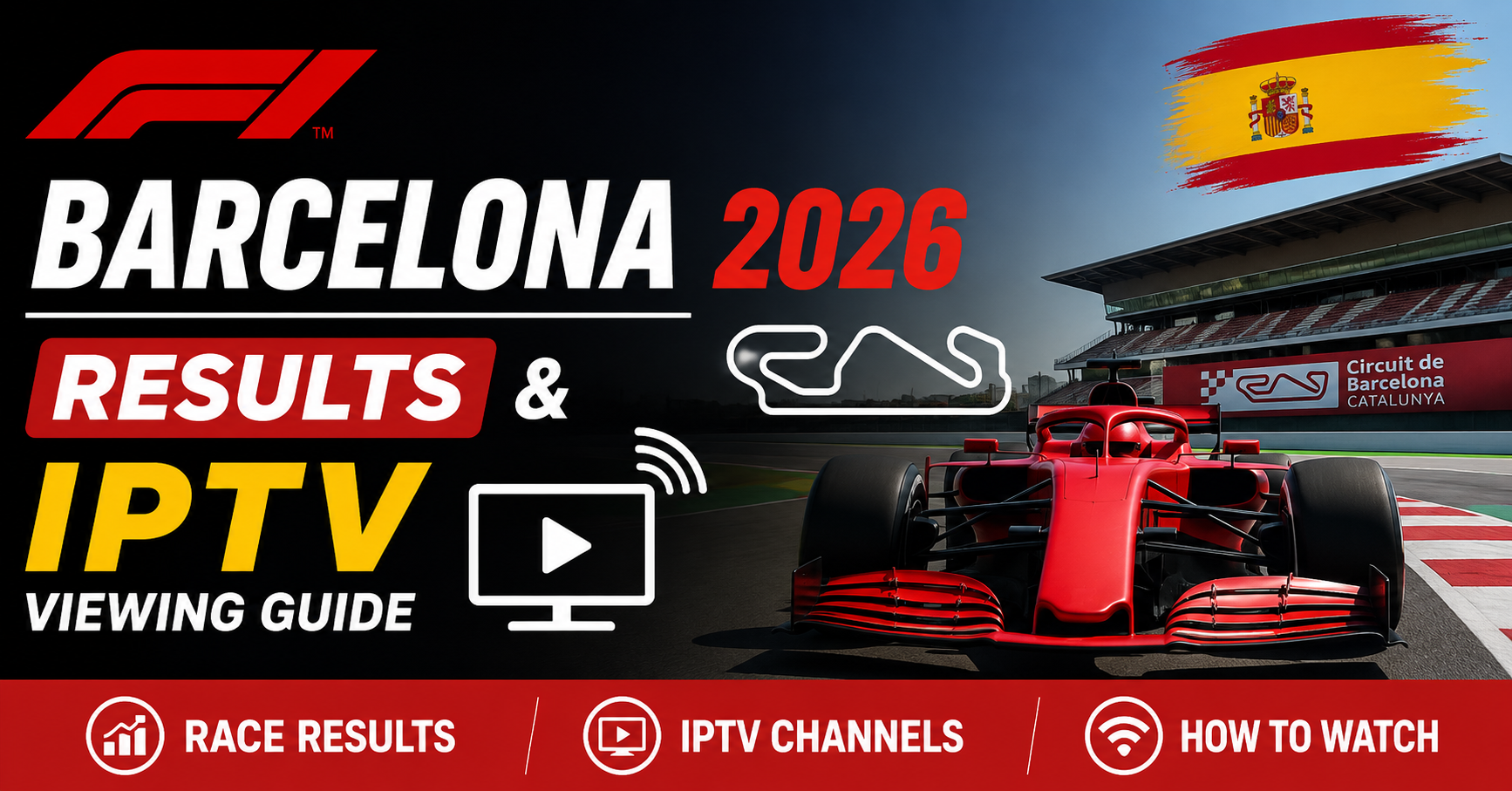

The Spanish Grand Prix has a reputation that confuses casual fans. People call it boring. Then they sit down to actually watch a race weekend at the Circuit de Barcelona Catalunya and realise the track is one of the most brutal technical examinations in motorsport. Long corners punish a weak chassis. Tyre degradation separates the smart teams from the fast ones. And in 2026, with the new regulation cars in their debut season, Barcelona did exactly what it always does. It exposed who actually built a complete car and who just built a fast one.
If you missed the race or your feed froze during the only overtake that mattered, here is the short version before we go deeper. The 2026 Spanish Grand Prix rewarded tyre management over raw qualifying pace, the front of the grid was decided in the final stint rather than on Saturday, and most viewers who lost their stream did so during the opening laps when concurrent traffic peaked, not because their service was fundamentally broken. A frozen screen during lights out is almost always a load problem, not a subscription problem, and this IPTV Viewing Guide 2026 will treat it that way.
What Actually Decided the Race in Barcelona
The headline result was settled on strategy, not on a last lap dive bomb. Barcelona’s layout makes following another car genuinely hard, even with the revised 2026 aerodynamic rules that were supposed to improve wheel to wheel racing. So the teams that nailed their pit windows and protected their rear tyres through the long right handers ended up ahead of cars that were quicker over a single lap.
The midfield told a more interesting story than the podium. A couple of teams gambled on a one stop strategy and watched their tyres fall off a cliff in the final ten laps. One driver who sat comfortably inside the points dropped four positions in the closing stage because the rubber simply gave up. That is Barcelona in a sentence. The circuit does not forgive optimism.
Pro Tip:
If you only have time to watch one session from a Barcelona weekend, skip qualifying and watch the final stint of the race. The track’s degradation profile means the real drama almost always lands in the last fifteen laps, long after casual viewers have switched off.
How the tyre war shaped the podium
The compound choice going into the weekend split the paddock. Teams that started on the harder rubber sacrificed early track position but kept their options open, while the aggressive runners burned through their advantage before half distance. By the time the leaders hit their second stops, the gaps that looked decisive on lap five had quietly evaporated.
What stood out was how the long sweeping corners in the middle sector punished anyone running outside their tyre window. Drivers who pushed a tenth too hard paid for it two laps later with graining, and once graining sets in at Barcelona it rarely recovers.
Where the midfield battle was won and lost
Points in the lower half of the top ten came down to undercut timing. The teams with sharper pit wall calls jumped two or three rivals without ever passing them on track, which is the quiet reality of modern racing at circuits where overtaking is hard.
Why Your Stream Froze When the Lights Went Out
Here is the part most race fans actually need. If your feed stuttered or froze in the opening laps, you are not alone, and your service is probably fine. Race starts create the single largest concurrent traffic spike of any live event. Everyone presses play within the same ninety second window, and that surge hammers every layer of the delivery chain at once.
A single lap one freeze followed by a clean rest of the race is the classic signature of a load spike, not a broken subscription. The stream recovered because the initial rush settled, not because anything was repaired on your end.
| Common Symptom | Usual Real Cause |
|---|---|
| Freeze only at race start | Concurrent traffic spike |
| Buffering every few minutes | Weak local connection or wifi |
| Audio fine, video stalls | Bandwidth throttling |
| Total blackout all session | Source or DNS issue |
| Lag only on one device | Underpowered hardware |
Once you can read the symptom correctly, the fix becomes obvious instead of frustrating.
Pro Tip:
Open your stream sixty to ninety seconds before lights out, not at the formation lap. Connecting early means your player has already negotiated bandwidth and filled its buffer before the start surge hits, which is the simplest trick in this whole IPTV Viewing Guide 2026.
The race start surge explained simply
Think of a live race feed like a motorway at rush hour. The road is fine at 2pm. At lights out, every viewer merges on at once. The congestion is temporary and clears on its own, which is exactly why your picture sharpens a few laps in.
Quick fixes that actually work mid race
Switch to a wired ethernet connection if you can, drop the stream quality one notch during the opening laps, and close background devices eating your bandwidth. Three small moves that solve most start line freezes without touching your subscription at all.
How to Set Up a Clean F1 Weekend Stream
A good race viewing setup is mostly preparation, not luck. The viewers who never seem to buffer are the ones who sorted their hardware and connection long before race day, and this IPTV Viewing Guide 2026 leans hard on that idea.
Start with the connection. Wifi is convenient and unreliable for live sport. A wired connection to your streaming device removes the single biggest cause of mid race stutter. After that, the player app matters more than people expect, because a well built player recovers from a dropped segment far faster than a basic one.
- Use a wired connection for the main viewing screen wherever possible
- Pick a player known for stable buffering rather than flashy features
- Test your full setup the night before, not an hour before lights out
- Keep a second device ready as an instant backup feed
- Restart your router a few hours ahead of a major race
Pro Tip:
Run a ten minute test stream the evening before any big Grand Prix. If it holds steady for ten minutes the night before, it will almost always hold for a full race, and you avoid discovering a problem during the warmup lap.
What Sports Spikes Teach You About Infrastructure Quality
This is where casual viewers and serious operators see the same event differently. A major F1 race is a stress test. The weekends that separate reliable services from shaky ones are exactly these high traffic moments, and an IPTV reseller who has lived through a few of them learns to read the warning signs early.
For anyone running the supply side, race day is revealing. A reseller panel built on a single source with no failover will expose itself the moment forty thousand viewers hit play together. The IPTV reseller who invested in redundancy barely notices the spike, while the one chasing the cheapest infrastructure spends the race answering angry messages.
| Cheap Infrastructure | Professional Infrastructure |
|---|---|
| Single source | Multiple sources |
| No failover | Automatic failover |
| No redundancy | Backup uplinks |
| Frequent downtime | Higher stability |
| Limited monitoring | Active monitoring |
The pattern repeats every season. A panel owner who treats sports spikes as an afterthought eventually loses customers to one who planned for them.
Why resellers feel race day before subscribers do
A sub reseller usually sees the first signs of trouble, because complaints flow upward through the IPTV distribution network faster than panel dashboards update. By the time a panel owner notices load climbing, the credit UK IPTV reseller below them is already fielding the first wave of messages.
The smarter IPTV operator watches the calendar. Big race weekends, title deciders, and overlapping football fixtures all create predictable surges, and an IPTV business owner who pre scales ahead of those dates avoids the churn that hits reactive competitors. If you want a deeper breakdown of stable streaming setups, the team at britishseller.co.uk covers this in practical detail.
Frequently Asked Questions
Where does this IPTV Viewing Guide 2026 recommend watching the Spanish GP?
Watch through a service with strong failover and a stable player app, on a wired connection where possible. This IPTV Viewing Guide 2026 prioritises reliability over price, because the cheapest feed almost always fails first during the race start surge when concurrent demand peaks hardest.
Why did my stream freeze only at the start of the F1 race?
Race starts are the largest concurrent traffic spike of any live event. Everyone presses play in the same short window, overloading the delivery chain briefly. A single start freeze that clears within a few laps is a load spike, not a faulty subscription, and it usually resolves itself.
What is the most reliable setup according to this IPTV Viewing Guide 2026?
A wired ethernet connection, a stable player app, a tested setup the night before, and a backup device ready. This IPTV Viewing Guide 2026 treats preparation as the real fix, since most race day freezes come from connection and timing rather than the source feed itself.
How should an IPTV reseller prepare for a big race weekend?
An IPTV reseller should pre scale capacity ahead of the calendar date, confirm failover is active, and warn sub resellers about the expected surge. A panel owner who plans for predictable sports spikes avoids the churn that hits reactive competitors during peak traffic.
Can buffering during the race ever be my own fault?
Often, yes. Weak wifi, background downloads, or underpowered hardware cause more buffering than people admit. If audio plays cleanly but video stalls, the bottleneck is usually local bandwidth, not the stream source. Wiring your device and closing background apps fixes most of it.
Was the 2026 Spanish Grand Prix actually worth watching?
Yes, if you value strategy over chaos. Barcelona rewards tyre management and pit timing rather than dramatic overtakes, so the real story unfolded in the final stint. Viewers who switched off early missed the closing laps where the order genuinely changed.
Success Checklist
Subscribers
- Open your stream sixty to ninety seconds before lights out
- Use a wired connection for your main race screen
- Test the full setup the night before a big Grand Prix
- Keep a second device ready as an instant backup
- Drop quality one notch during the opening laps if it stutters
Resellers
- Pre scale capacity ahead of major race dates
- Confirm failover and backup uplinks are active before the weekend
- Monitor load during the start window, not after complaints arrive
- Warn sub resellers about predictable sports spikes in advance
- Review panel performance after every high traffic event
Sub Resellers
- Flag early complaint patterns upward to your panel owner fast
- Keep customers informed during known high demand race weekends
- Track which devices generate the most buffering reports
- Hold a small credit buffer for last minute capacity needs
- Build a simple checklist customers can follow before lights out
Final Takeaway
Barcelona 2026 proved again that races are won by the teams that manage degradation, not just the ones with raw pace, and streaming follows the same logic. The viewers and resellers who prepare for the predictable race start surge barely notice it, while everyone chasing the cheapest shortcut spends the opening laps staring at a frozen screen. Plan ahead, wire your connection, and treat sports spikes as the stress test they are.