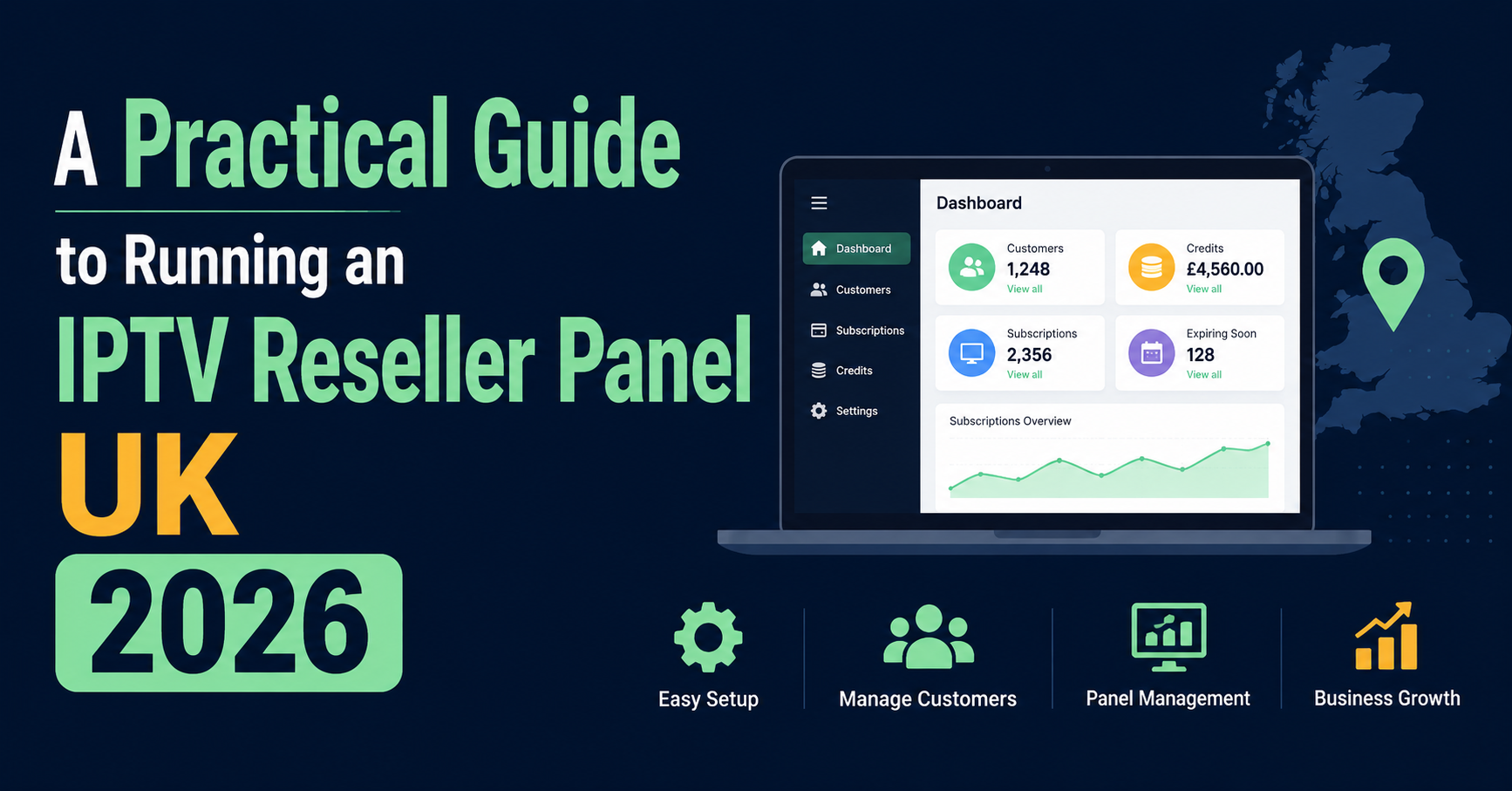

An IPTV Reseller Panel UK provider gives you a login to a dashboard where you buy credits in bulk, convert them into customer subscriptions, and set your own retail prices. You’re not building servers or writing software. You’re managing a business layer on top of infrastructure someone else operates, and how well that infrastructure performs directly decides whether your customers stay or leave.
What an IPTV Reseller Panel UK Provider Actually Sells You
Strip away the marketing language and a UK reseller panel is three things bundled together: access to a credit system, a customer management interface, and a support relationship with whoever runs the backend. The credits themselves aren’t a product you consume once. Each credit typically activates one line for a set period, usually a month or a year depending on how the provider structures packages. You buy a batch of credits upfront, then draw them down as you sign up customers.
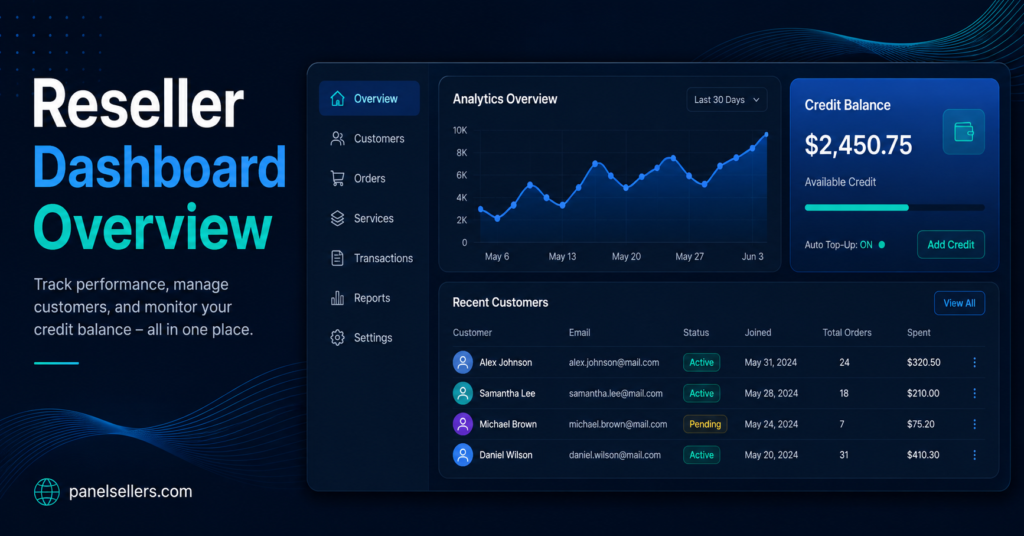
The dashboard side matters more than most new resellers expect before they’ve actually used one. A cluttered interface that makes it hard to see which lines are about to expire, or which customer is on which package, turns into a support headache within a few weeks of onboarding real users. Look for a panel that shows expiry dates clearly, lets you extend or renew lines without contacting support each time, and gives you enough visibility to catch problems before your customers do.
Pro tip: Before committing to a package, ask the provider for a short demo login or screenshots of the actual dashboard rather than relying on the sales page description.
Questions Worth Asking Before You Commit to a Provider
Most comparison content focuses on price per credit and stops there. That’s a mistake, because price is the easiest variable to compare and the least predictive of whether the relationship will hold up six months in.
Ask how the provider handles downtime. Every infrastructure has outages eventually, so the useful question isn’t whether they happen but what the provider does when they do. Do they proactively notify resellers, or do you find out because your own customers start messaging you? Ask what happens to unused credits if you pause your business for a few months. Some providers let credits sit indefinitely; others attach expiry windows that can catch a slower-moving reseller off guard.
It’s also worth asking directly how many servers or regions the backend uses. A provider running everything through a single location tends to struggle more during high-demand periods, when concurrent connections spike and the strain shows up as buffering rather than outright failure, which is often harder for a reseller to diagnose and explain to a frustrated customer.
Pro tip: Keep a written record of every promise a provider makes during onboarding. If support quality shifts later, you’ll want that reference point.
IPTV Reseller Panel UK Pricing and Credit Structures
Credit pricing in the UK reseller market usually scales with volume. Buying a small batch of credits costs more per credit than buying in bulk, which makes sense for the provider but means new resellers often overpay per customer in their first few months before they’ve built a base large enough to justify a bigger package.
| Package Size | Typical Suitability | Trade-off |
|---|---|---|
| Small starter batch | Testing the market, first customers | Higher cost per credit |
| Mid-size batch | Established side business | Better margin, requires upfront cash |
| Large batch | Full-time reseller or sub-reseller network | Lowest per-credit cost, ties up capital |
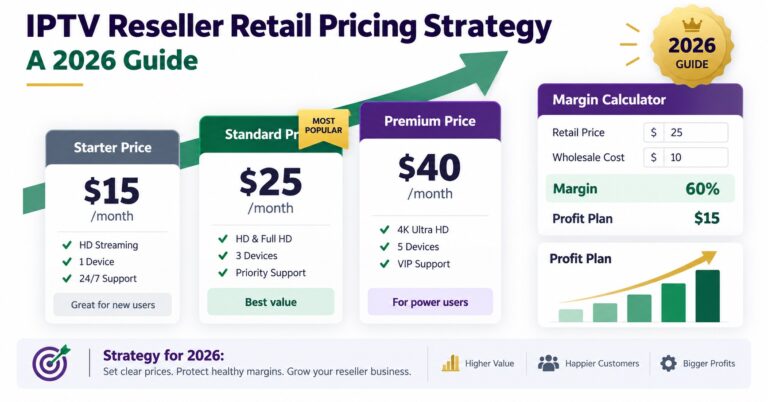
Margins depend on what you charge customers versus what each credit costs you, and that’s entirely within your control as a reseller. Providers generally won’t dictate your retail pricing, though most publish a suggested range so resellers don’t undercut the market to the point where it becomes unsustainable. Compare current credit packages before deciding which tier makes sense for where your customer base actually is right now, not where you hope it’ll be in six months.
Setup and Device Considerations for UK Customers
UK customers connect through a wide mix of devices, from Android boxes and Firestick to smart TVs and dedicated set-top boxes, and each one has slightly different quirks when it comes to app installation and stream handling. A reseller who understands these differences answers support questions faster and looks more credible than one repeating generic troubleshooting steps.
Firestick setups, for example, involve sideloading rather than installing directly from an app store, which trips up a meaningful number of first-time customers. See a full breakdown of common Firestick setup fixes if that’s a device your customer base leans towards. Smart TV apps, by contrast, tend to be more locked down and sometimes require a separate player app rather than a native install, which is worth explaining upfront rather than after a customer has already struggled with it.
Network conditions on the customer’s end matter just as much as anything happening on the panel side. A customer on a congested household connection with several devices streaming simultaneously will experience buffering regardless of how strong the backend infrastructure is, and being able to explain that distinction calmly saves a lot of unnecessary escalations.
Mistakes New UK Resellers Tend to Make
Underpricing early is probably the most common one. New UK IPTV resellers, keen to build a customer base fast, sometimes set prices so low that the margin barely covers the cost of the credit itself, leaving no buffer for refunds, churn, or the inevitable customer who needs extra support time. A slightly higher price with room to offer occasional goodwill gestures tends to build a more sustainable business than racing to the bottom.
Another frequent mistake is treating support as an afterthought. Customers who can’t reach anyone when a stream drops during an evening tend not to renew, no matter how good the underlying service was for the rest of the month. Setting expectations early, such as typical response times and the best way to reach you, prevents a lot of friction later.
Overcommitting to credit packages before the customer base exists is a third pattern worth watching for. Buying a large batch because the per-credit price looks appealing, then sitting on unused credits for months while slowly acquiring customers, ties up cash that could have been spent on marketing or held as a buffer.
Reseller or Sub-Reseller: Which Fits Your Situation
If you’re starting from nothing, going in as a sub-reseller under an established parent reseller can lower the barrier to entry considerably. You typically get access to smaller credit batches at a slightly higher per-credit cost, but without needing the upfront capital a direct reseller relationship often requires. The trade-off is dependency: your business relies on the parent reseller’s relationship with the backend provider staying stable, and you generally have less influence over pricing or support escalation than a direct account holder does.
Going in as a direct reseller gives you more control over pricing, credit management and communication with the provider, but usually asks for a larger initial commitment and a more direct relationship with troubleshooting when things go wrong. Neither path is objectively better; it comes down to how much capital and risk tolerance you’re working with when you start.
FAQs
How many credits do I need to start reselling in the UK?
There’s no fixed number, but most new resellers start with a small batch to test demand before committing to a larger package. Starting too big before you have customers ties up money unnecessarily.
Can I set my own prices as a reseller?
Yes, providers typically leave retail pricing entirely up to the reseller, though most suggest a reasonable range to keep the market from collapsing on price.
What happens if a provider’s servers go down?
Reliable providers communicate outages and work on fixes actively. How a provider handles downtime, rather than whether it ever happens, is the better indicator of long-term reliability.
Do reseller credits expire?
This varies by provider. Some credits remain valid indefinitely until used; others carry expiry windows. Confirm this detail before purchasing, especially for larger packages.
Is becoming a sub-reseller a good starting point?
It can be, particularly if capital is limited. You typically pay slightly more per credit but avoid the larger upfront commitment a direct reseller account often requires.
Conclusion
Running an IPTV Reseller Panel UK business comes down to fewer moving parts than it first appears: reliable credits, a dashboard you can actually work with, and a support relationship that holds up when something breaks. The providers worth working with are the ones transparent about downtime, clear about credit terms, and realistic about what their infrastructure can handle during busy periods. Start with a package size that matches your actual customer base rather than the one with the best headline price, keep your support response times consistent, and revisit your provider relationship periodically rather than assuming day-one conditions will hold indefinitely.
Provider Evaluation Checklist
- Ask for real dashboard access or screenshots before purchasing
- Confirm whether credits expire and under what conditions
- Check how the provider communicates during outages
- Compare per-credit pricing across at least two package sizes
- Clarify sub-reseller versus direct reseller terms if relevant
- Set your own support response expectations before onboarding customers